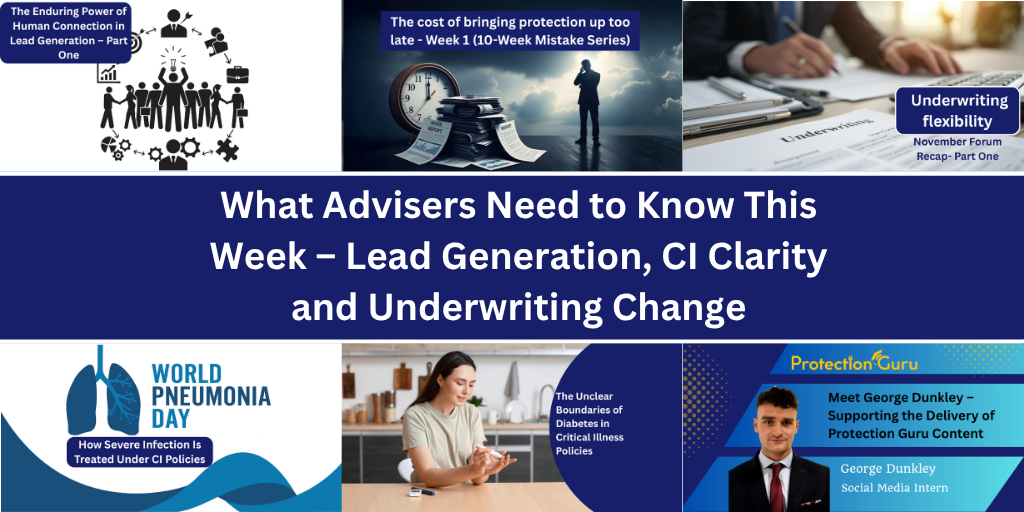
Last week Protection Guru delivered a strong mix of practical insights for advisers, from the power of human connection in generating protection business to the evolving landscape of Critical Illness (CI) definitions, underwriting flexibility and how to position protection conversations for better client outcomes.
We started the week by welcoming a new author to Protection Guru, Terry Balckburn. Terry runs The Wealthy Adviser Club. He has a tremendous track record of building successful adviser firms and has created the club to help other advisers learn from his success. If you click the link below you can find out how to get a 7-day free trial of Wealth Adviser club from a further link included in the article.
In his first contribution he provides a reminder that referrals and trusted professional partnerships still deliver the highest quality leads.
The Enduring Power of Human Connection in Lead Generation – Part One
Terry explains why he feels warm introductions outperform digital marketing every time. Advisers who consistently ask for referrals, follow up well and nurture professional connections build sustainable pipelines without the cost or inconsistency of online leads. Digital tools can help credibility but cannot replace trust. Part Two this week shifts to how AI and automation can enhance adviser efficiency while keeping advice personal.
Last week we added important extra information to the summaries that are being provided by our medical team. These now include details of what additional information may be required for underwriting and what evidence may help speed up claims decisions.
This information is now included in our article to recognise World Pneumonia Day and looks at how severe infection is treated under CI policies.
World Pneumonia Day: How Severe Infection Is Treated Under CI Policies
Most pneumonia cases do not meet CI thresholds, but severe infection can trigger claims through sepsis benefits or intensive care definitions. Different insurers take different approaches, including standalone sepsis definitions or mechanical ventilation clauses. Advisers should understand these distinctions, especially when comparing older and newer policies.
We also looked at the blurred boundaries of diabetes in CI policies in our piece:
The Unclear Boundaries of Diabetes in Critical Illness Policies
While Type 1 diabetes is widely covered, ambiguity remains around LADA and other mixed presentations. With obesity rising and diagnosis patterns changing, definitions based purely on traditional categories may no longer be enough. The article also highlights how advances in insulin delivery, including pumps and hybrid closed-loop systems, should be reflected in modern policy wordings. The detailed underwriting checklist provides a helpful reference for advisers handling diabetic cases.
Matthew Chapman is one of the most respected protection trainers in our industry and this week delivered the first of a 10-Week series on mistakes adviser frequently make, by examining why advisers often bring protection into the conversation too late.
The Cost of Bringing Protection Up Too Late
Introducing protection at the end of a meeting makes it feel like an afterthought rather than core advice. Clients mentally move on once the main product is discussed, leading to lower engagement, reduced trust and higher cancellations. Framing protection early changes the dynamic completely. Matthew’s coaching experience shows that firms who reposition protection upfront see significant improvements in both conversion and client outcomes.
Our Protection Forum this month identified some real horror stories about problems advisers are experiencing with lengthy delays. Every insurer CEO should be reading this analysis and asking themselves what they can do to improve their business. I am sure the Financial Conduct Authority will also find the feedback from advisers fascinating and it may identify issues they should consider in the context of the pure protection review.
Protection Forum (November 2025) – Underwriting Flexibility – Part One
In this forum, our panellists welcomed improvements such as faster digital systems and better access to underwriters, but significant frustrations remain. Advisers continue to face slow turnaround times, inconsistent communication and limited clarity once cases enter underwriting. Key areas needing attention include mental health disclosures, occupation classes and the ability to reassess underwriting when clients’ circumstances change. There is progress, but cultural and operational gaps are still holding the market back.
We closed the week with a second article inviting you to get to know one of the newer members of the Protection Guru team:
Meet George Dunkley – Supporting the Delivery of Protection Guru Content
George explains his role in managing publishing and content scheduling while studying and working towards his qualifications. The article also explains his background in financial advice and passion for supporting advisers, to help ensure Protection Guru content remains clear, timely and accessible.
Have a great week everyone!