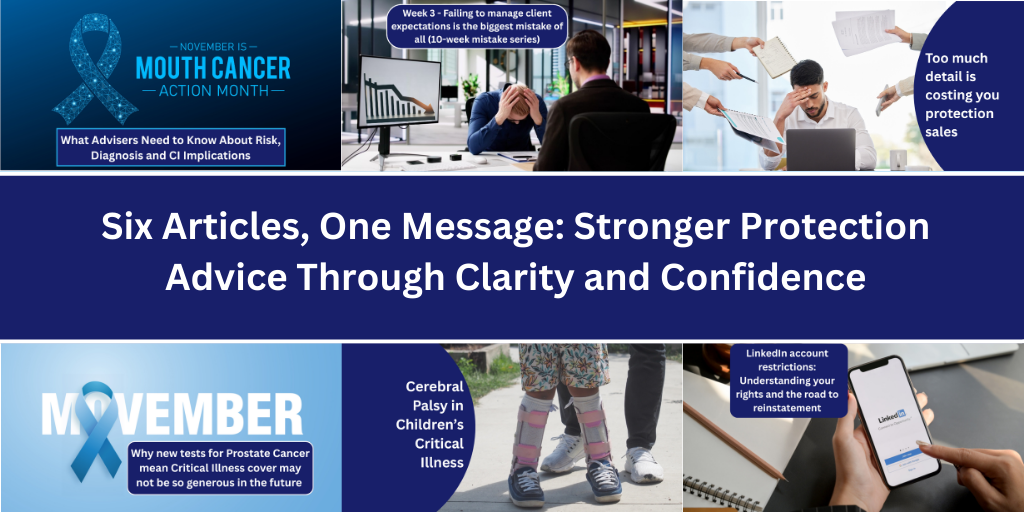
Reading through last week’s Protection Guru articles, each story pulls you back to the same core truth of good advice: clarity, preparation and leadership matter more than ever.
Melanie Goodman’s piece, LinkedIn account restrictions: Understanding your rights and the road to reinstatement, shows how easy it is for a professional to lose control of their digital identity overnight and how vital it is for advisers to treat platform access as part of operational resilience. Her experience underlines that prevention always beats cure. Simple actions like two‑factor authentication, keeping recovery details updated, backing up your data and owning your audience give you far more control when something goes wrong. More importantly, her legal journey through the Digital Services Act should remind every adviser that automated decisions by online platforms are not the final word. Knowing your rights, escalating appropriately and communicating clearly can turn an impossible situation into a resolved one.
Movember – Why new tests for Prostate Cancer mean Critical Illness cover may not be so generous in the future, highlights that prostate cancer is being detected earlier thanks to better tests like MRI scans and new liquid biopsies, but this also means more early, low-grade cancers are being found. As a result, insurers are already reducing full Critical Illness (CI) payouts for early-stage prostate cancer and further advances in screening may lead to more claims and pressure insurers to cut back cover or increase prices. With major trials like TRANSFORM set to make screening even more accurate and widespread, this article concludes that CI cover is unlikely to stay as generous as it is today, so advisers should encourage clients to review and secure cover sooner rather than later.
Gary Waters takes you in a different direction but lands on the same theme: simplicity and leadership drive outcomes. His article, Too much detail is costing you protection sales, shows why protection conversations often fail. Advisers overwhelm clients with product detail the human brain simply cannot absorb. Miller’s Law explains it perfectly. When the brain is overloaded, the default answer becomes no. Gary’s message is clear: a confused brain says no, a clear message gets the yes.
Matthew Chapman’s Failing to manage client expectations is the biggest mistake of all reinforces how easily protection collapses when the client doesn’t know what’s coming. Protection doesn’t fail because of price. It fails because advisers drop it into the meeting too late. Matthew’s guidance on expectation management, framing the conversation at the start, setting a clear journey, and leading with transparency,changes the entire dynamic. Clients lean in rather than shut down.
Our clinical team’s article, Mouth Cancer Awareness Month: What Advisers Need to Know About Risk, Diagnosis and CI Implications, highlights how rising HPV‑related cancers are reshaping conversations advisers need to be ready for. Understanding the difference between in‑situ and invasive malignancy helps advisers explain why CI claims are paid or declined. Knowing what evidence speeds up a claim helps families receive support faster when treatment disrupts speech, swallowing or work.
Finally, Cerebral palsy in Children’s Critical Illness gives advisers the grounding they need in a condition that many clients may never have discussed before. CP varies widely, diagnosis usually comes after birth, and Children’s CI policies rely on consultant confirmation rather than specific tests. This is where advisers can make a real difference. Families often face therapy blocks, equipment costs, travel and time away from work. A CI payout gives them breathing space they rarely talk about but always need.
Across all six articles, the message is unmistakable. Advisers who prepare clients, protect their digital identity, keep explanations simple and confidently deliver better protection outcomes. Clarity creates confidence. And confidence leads to better decisions for clients.
Have a great week everyone!