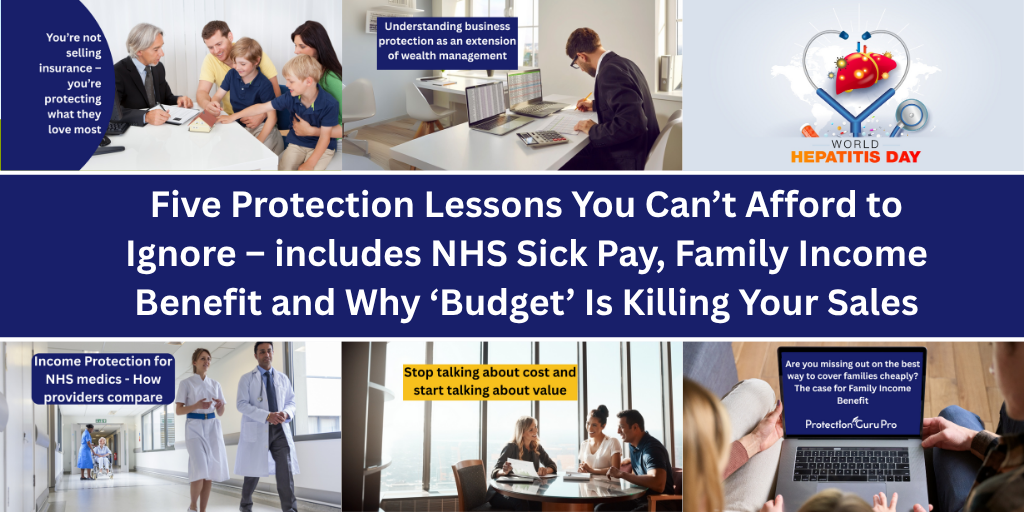
Last week’s content covered some very practical ground. A mix of behavioural coaching for advisers, detailed technical comparisons and a reminder of why protection should be central to wealth planning. If you missed any of the pieces, here’s your catch up.
We started on Tuesday with You’re not selling insurance – you’re protecting what they love most.
Gary Waters makes a simple but powerful point here. Stop challenging how people spend their money. Start listening to what matters to them. If a client spends £200 a month on their dog’s injections but says no to life cover, the answer isn’t to criticise. It’s to understand why and reframe the conversation so your advice protects the things they won’t give up. This is a very human take on the value of protection advice.
Also on Tuesday, Understanding business protection as an extension of wealth management.
Amanda Newman Smith looks at the overlap between wealth planning and protection. Consumer Duty and inheritance tax changes are forcing wealth managers to think more carefully about how a client’s business underpins their entire financial plan. Matt Chapman and Alan Richardson explain why even a small premium, often less than one per cent of turnover, can protect the asset that funds the client’s lifestyle. This piece also highlights how partnerships between wealth advisers and protection specialists are becoming essential.
On Wednesday, Jason Coleman marked World Hepatitis Day with a strong reminder of why understanding medical conditions matters. Hepatitis can quietly damage the liver for years and eventually lead to failure, transplant or liver cancer. Jason explains how Critical Illness plans deal with these outcomes, rather than the virus itself, and why advisers need to be ready to explain this clearly.
Thursday brought two articles.
First, Income Protection for NHS medics – How providers compare.
This detailed insight breaks down NHS sick pay arrangements and how different insurers match their deferred periods to avoid gaps in income. Jason looks at which providers cover the widest range of medical roles, where minimum benefit guarantees make a difference, and even which insurers will continue cover through sabbaticals. For anyone advising NHS professionals, this is essential reading.
Then Matthew Chapman’s Stop talking about cost and start talking about value.
This is all about changing the language we use. Stop asking clients for a budget and hoping to work with whatever number they guess. Instead, set expectations and talk about investment, not cost. Matthew’s simple benchmark, around 5% of income, gives advisers a clear framework to shift the focus from price to outcomes. It’s a small change that can make a big difference to client conversations.
Finally, on Friday we revisited a topic that continues to be overlooked. Are you missing out on the best way to cover families cheaply? The case for Family Income Benefit.
Family Income Benefit doesn’t get the attention it deserves. For many clients, a guaranteed monthly income after a death is far more practical than a lump sum. Jason makes the case for why advisers should have this in their toolkit and explains how Protection Guru Pro lets you compare quality, price and value side by side.
This was a good week of practical thinking. Real-world advice about how to frame conversations and a clear technical focus on areas that are sometimes overlooked. If there is one theme running through everything, it’s this: protection isn’t about products. It’s about making sure clients can hold on to what really matters when life doesn’t go to plan.