Before providing my usual summary of last week on Protection Guru let me remind everyone that at Noon on Tuesday 3rd June we have our Protection Forum on Growing Protection Advice In The Mortgage Market – if you don’t already have a ticket, you can use this link to obtain one.
Also, later this week we will be publishing the video from our special Protection Forum last week on what advisers need to do to meet their Consumer Duty obligations if Legal & General are removing your clients Fracture cover. Look out for this one as it explores the specific sections of the FCA rule book that are most relevant and why this is an issue advisers cannot ignore. One tip I will give you before we publish the full summary, is to ask your Legal & General BDM for a list of all your clients that are affected, or confirmation that you have none. I would imagine networks are already asking for this information to alert their members to all the clients who will need extra advice.
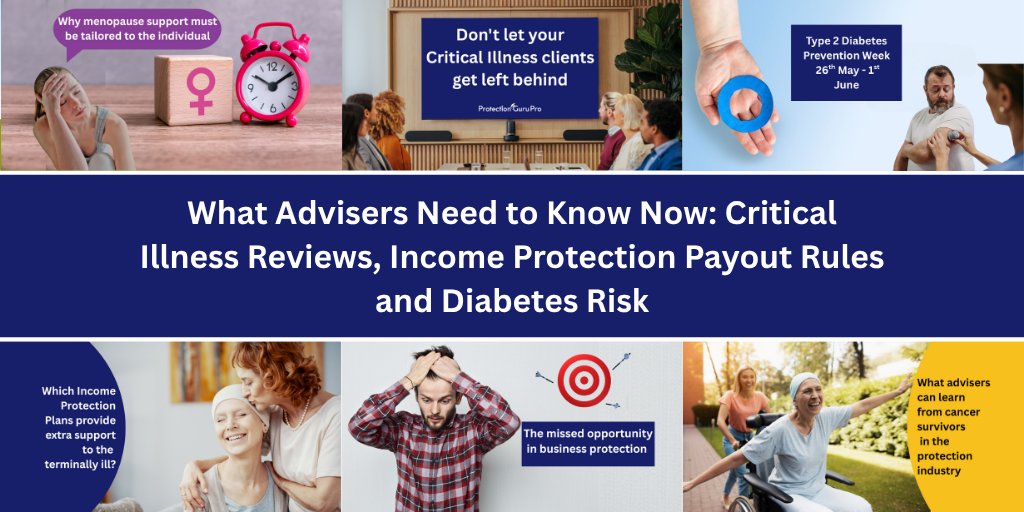
Last week’s articles on Protection Guru focused on practical steps advisers can take to improve recommendations, meet Consumer Duty obligations, and help clients understand the risks they face. From legacy Critical Illness policies to diabetes prevention, terminal illness in Income Protection (IP) and lessons from cancer survivors, each article has a clear takeaway. We also highlight a continuing missed opportunity in the business protection market.
How to evaluate the quality of existing Critical Illness plans in under five minutes
Protection Guru Pro now enables advisers to compare existing client Critical Illness cover against current plan definitions in minutes. With Consumer Duty requiring regular reviews and evidence of value, this tool can help you identify when older policies no longer offer adequate protection. It also supports suitability reports with a bespoke client summary.
Preventing Type 2 Diabetes – three simple ways to reduce your risk
Jason Coleman uses his own experience of living with type 2 diabetes to highlight how lifestyle changes can reduce the risk of developing the condition. This article outlines key prevention steps and gives advisers clear points to raise with clients. It also explains how a type 2 diagnosis may affect protection underwriting and how advisers can help clients access cover tailored to their needs.
Which Income Protection Plans provide extra support to the terminally ill?
This article compares the limited but important terminal illness provisions available across four IP providers. It explains the difference between deferred period waivers and lump sum payments and sets out when each insurer pays. There is a notable difference between providers who require a definition of incapacity and those who do not. It’s a reminder to check these features carefully when recommending IP.
The missed opportunity in business protection
With over 5.5 million SMEs in the UK, the business protection gap remains significant. Stuart Halliwell outlines the different risks small firms face depending on where they are in their growth journey. The article also explains why this area often leads to larger case sizes, longer client retention and more referrals. There is a clear need for more structured conversations with business clients about succession planning, key people, and liabilities.
What advisers can learn from cancer survivors in the protection industry
On National Cancer Survivors Day, three industry professionals shared their own experiences of diagnosis and treatment. The stories highlight the importance of early detection, checking for cover gaps during probation periods, and making better use of added-value services. Advisers can use these real-life examples to help clients understand how protection policies work in practice and how financial support can ease the burden during serious illness.
Have a great week.