We all recognise that income protection is an essential, but sadly still underutilised, protection product. Sales of life and critical illness cover still outstrip income protection and for many advisers and consumers, income protection is deemed too complicated or too expensive.
Consumer duty should arguably go some way to improving the importance placed on all protection insurance and in a drive to deliver better consumer outcomes, it will no longer be enough to simply ignore income protection. However, are we confident the product in it’s current state is actually fit for purpose in meeting the expectations and long-term needs of consumers.
For our November forum we discussed this, with particular focus on exploring ‘do income protection products need to change to better align with consumer duty requirements?’
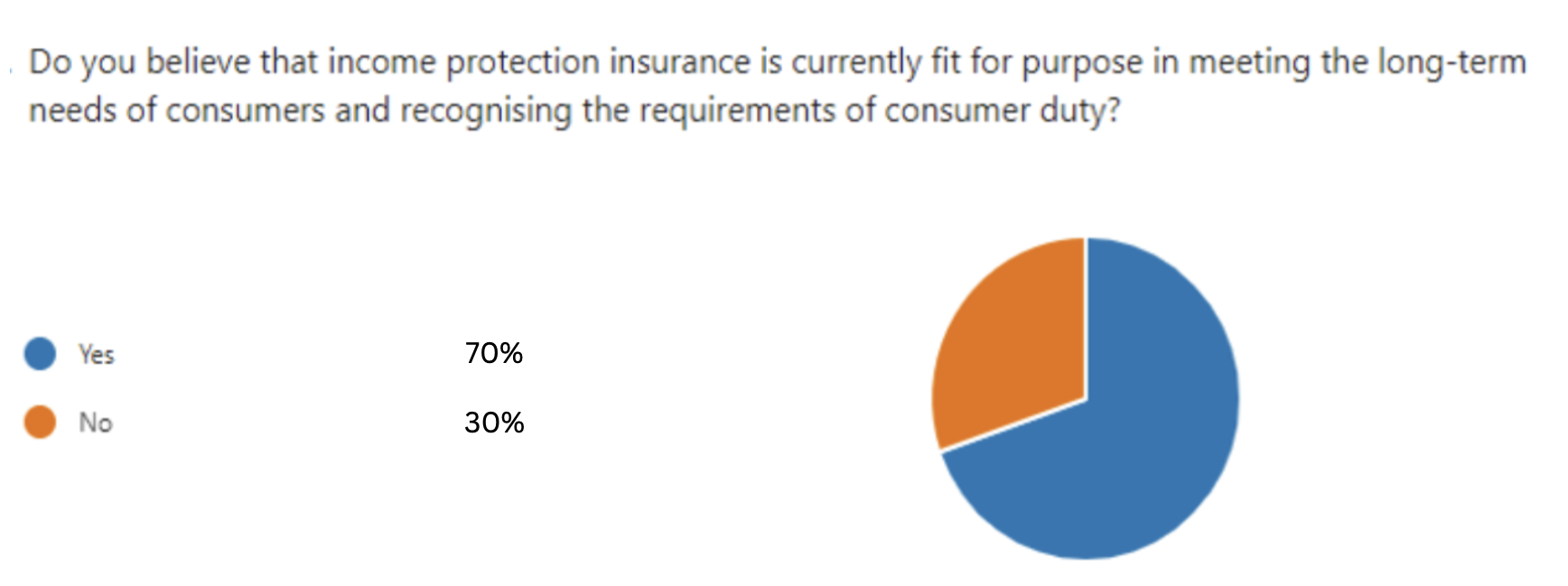
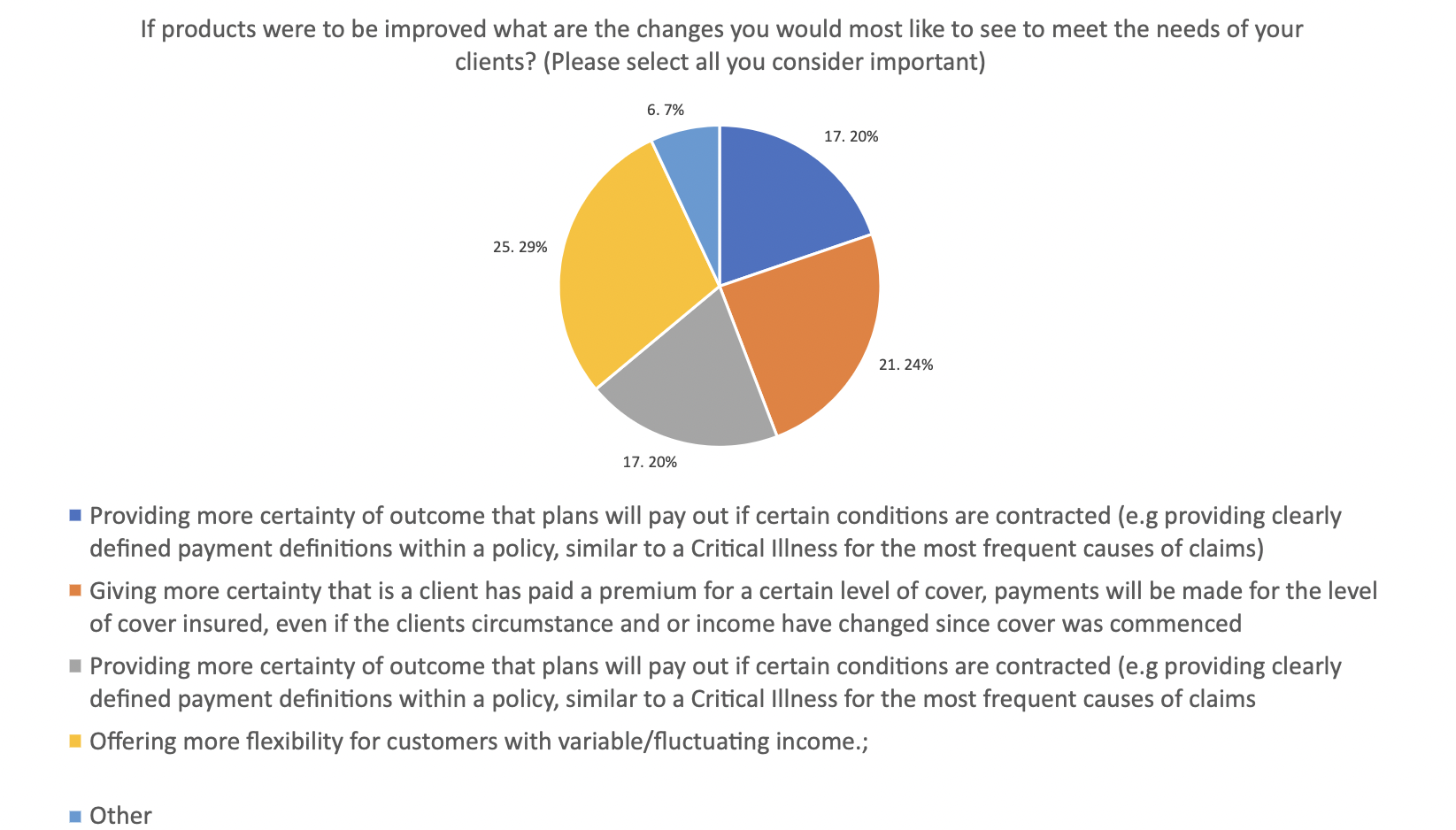
We also asked our adviser attendees some ‘pre-session survey’s’ which can be found below.
“I’d say about 85 to 90% of my clients have income protection policies recommended to them. And that’s purely because of my belief in the importance of protecting your income. And it is something I reiterate over critical illness policy a lot of the time. But I do find that the underwriting is more restrictive, especially alongside any conditions that are in the last five years.”
“I think more of the industry could recognise that when an exclusion is situational, there could be more flexibility and not penalise somebody for potentially 30 or 40 years of their policy term… if you are going to review or offer a review on the exclusion, why does it have to be costed again according to the client’s age when there has been a decrease in risk for that exclusion to be reviewed? And the other thing I think we were talking about when we initially spoke, Adam, was just the flexibility around the incapacity for work... You know, we look at an income protection policy because you yourself are unable to work due to incapacity, but there’s little flexibility and little options there to protect household income. If somebody else in your family can’t work or you have to give up work to look after somebody else in the family around the carer benefit type philosophy.”
“Some providers do actually exclude guys if you’ve been accepted on special terms. So if you’ve been loaded for your policy due to adverse risk, normally it could be something simple as like an inflated BMI or you’ve got an exclusion already applied to the plan. Why can’t you then increase your policy subject when they’ve already removed the risk from the plan in the first place? So that’s something actually I’d like from a TCF perspective also to be changed because like I said, they’re paying for the extra risk or the risk has been removed.”
Click the audio playback below to listen to the full session.
Full session audio
Part 1:
Part 2:
Part 3:
Part 4:
“One of my personal bugbears is the lack of any kind of product with a five year deferment period, which is not something I’d ever really thought of as too much of an issue in the past, but more and more with time. Because we tend to find that a lot of clients do have group IP, but a lot of it is still written on a relatively short term basis with either a two or five year deferred period. And while the I guess product innovations with Zurich and Aviva have meant that anyone with a two year deferment period can be catered for, there isn’t currently anyone, as far as I’m aware, with a five year deferred period.”
“Be good to see more insurers offering the sort of NHS sick pay matching guarantee benefits that some insurers currently do, and extending that, I know a few offer it for teachers. Just saying obviously with Vitality, offering it for council workers and the like, it would be good to see that extended across people in those sort of I guess public sector occupations, but extending it across more insurers and also making sure that the jobs that people are doing within those sectors are covered as well.”
“We all have a part to play in seeing what changes we can make big or small, to help move things forward. And then we had this year some topical areas linking to what’s going on around us so consumer duty, where 44% of advisers said that they believe consumer duty will increase their focus on protection and then around cost of living, where around a third or just over a third of advisers say they aren’t doing anything at the moment to engage customers and help them to keep their protection policies in force.”