Last week’s content on Protection Guru had a strong health awareness theme. With National Eye Health Week taking place this month and September also being Childhood Cancer Awareness Month, advisers were reminded of the importance of linking national campaigns back to client conversations.
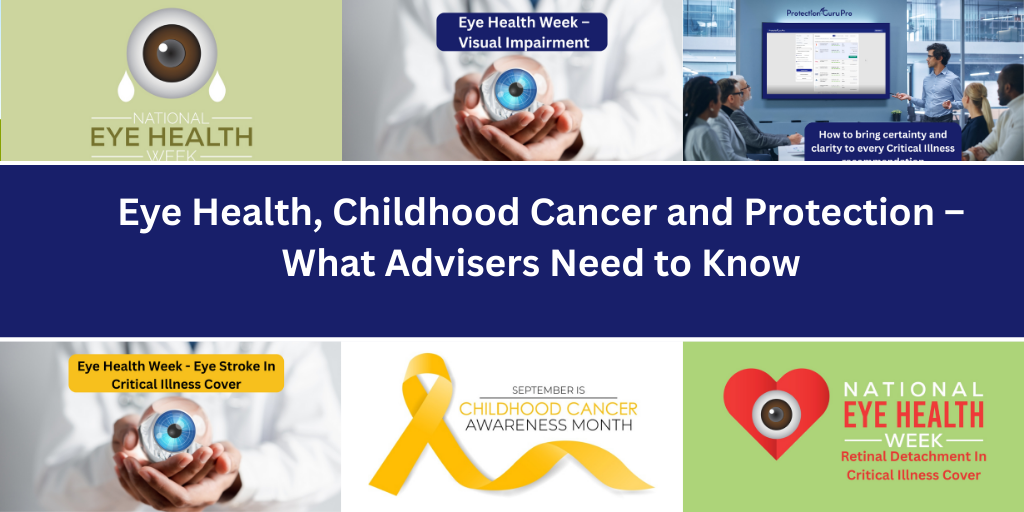
On Tuesday, Why National Eye Health Week should matter to protection advisers explored how advisers can use this annual event to highlight the value of good sight and the financial consequences if eye health fails. Amanda Newman Smith’s article pointed out that sight loss impacts 250 people every day in the UK, with more than two million already living with significant impairment. Advisers can encourage clients to attend regular eye tests and take advantage of insurer-provided services such as nutrition support, smoking cessation and virtual GP access. Importantly, the piece highlighted how Critical Illness and Income Protection policies step in with both financial and practical support where serious eye conditions arise.
Also on Tuesday, our five-part technical series on eye-related Critical Illness definitions began with Eye Health Week – Visual Impairment. This article unpacked the exact thresholds insurers use, from the strictest 3/60 acuity cut-off through to more generous 6/36 definitions. It explained how tunnel vision criteria apply and why small differences in definitions can have big consequences for claim outcomes. Advisers need to understand these details if they are to recommend products that will genuinely pay out when clients expect.
Thursday’s focus shifted to Eye Health Week – Eye Stroke In Critical Illness Cover. Here we explained that “eye stroke” refers to blockages in the main retinal blood vessels, leading to sudden and often permanent sight loss. While not included in standard stroke definitions, several insurers now cover it under enhanced or severity-based products. The adviser takeaway was clear: know which insurers include it and be able to explain it simply to clients as a “mini-stroke inside the eye”.
The same day, we also recognised Childhood Cancer Awareness Month – Common causes of childhood mortality. This article addressed a difficult but vital subject: the illnesses that most affect children at different ages, and how protection can support families through unthinkable circumstances. From congenital conditions in infancy, to leukaemia and brain tumours in later childhood, to the tragic rise of suicide in adolescence, the piece underlined why Children’s Critical Illness cover remains so important. Advisers need both sensitivity and technical clarity when having these conversations with parents.
Friday closed the week with Eye Health Week – Retinal Detachment In Critical Illness Cover. Retinal detachment is a true eye emergency, yet only Vitality currently names it in their definitions. The article explained the symptoms clients may experience, the risks that rise sharply with age, and why advisers should flag this rare but severe condition where cover is available.
The running theme across the week is clear: national awareness campaigns provide ready-made opportunities to raise meaningful issues with clients. Advisers who use these moments to connect lifestyle, health risks and protection needs can not only improve engagement but also secure better outcomes for families.
Have a great week everyone!