Cost of Living Crisis: Impact on Insurers & Support for Affected Clients
In the second half of our May forum we heard from insurers to provide their views on:
- The impact the cost-of-living crisis, as well as the wider economic woes are having on our industry?
- What the picture will be like as we start to move into Summer and the year ahead?
- What they are doing to support advisers and their clients
Our panellists included:
- Helen Bainbridge – Customer retention lead at Aviva
- Mike Pritchard – Commercial Manager at Legal & General
“So what we launched to market publicly a few months ago, but we have been running it behind the scenes on a sort of reactive basis for a few months before, is our cost of living scheme on our open book. So that is available to all customers who took out their products after November 2016. The reason for focusing on recent customers is that our experience of running the payment deferral scheme through COVID very clearly showed us that the customers who were struggling typically tended to be those who’d taken out their policies most recently. So somewhere in the region of about three-quarters of all those who are asking for help with the payment deferrals were people who’d taken out their policy in the last 5 or 6 years. So focusing on that, we’ve introduced our cost-of-living scheme and that allows customers who are facing financial difficulties, the opportunity to reduce their cover and reduce their monthly payments to a more affordable level. And then with a window to top that back up by buying a new policy after a year or after two years. So in terms of how it works, we’ve tried to keep it as simple as possible. The customer and/or their adviser can contact Aviva using their usual contact number or by filling in an online request form.”
“We’ve also made sure that we’re using existing product flexibility processes, so we use exactly the same processes we would use for a life-change benefit. And that means that we know that it works and we know that it’s simple and easy to explain to the customer. What we’ve realised is the key thing around that is communication. So gets to the point that was going on in the chat earlier around the importance of annual statements. When a customer has reduced their cover, the important thing is to remind them what they’re currently covered for, remind them what they used to be covered for, and nudge them to give them the opportunity. Hopefully when things have calmed down a bit and their finances have settled a little bit after a year or two years to be able to up their cover again.”
“What does this mean for advisors? We’re trying to give some positive support options that you can talk about with your customers. I guess the key thing here is that it is designed to try to prevent a lapse. We know in an ideal world that a customer wouldn’t be dialling down their cover. But if the other alternative is that they fall out of the habit of having that insurance in place, then clearly this is the kind of the better of the lesser of two evils, really.”
“We know often they are very nervous in talking about that. They feel embarrassed about it and they don’t want to ask for help. So a few months into our pilots we realised that actually really it was key not only to have advisors know about this and be able to have proactive conversations with their customers, but also that the customers, if they were just doing, for example, a Google search because they were having a bit of a crisis about their finances, that it would pull the right information up.”
“Of those who have been informed about the scheme and have gone on to talk to us about the scheme, around about 50% have actually taken it out. And of those, the vast majority of them had previously been calling in to cancel their policy. So actually it’s kind of a significant shift in terms of the outcome for that customer of those not taking up the scheme. A significant number of them have taken out a payment deferral and some have just chosen to remove some element of their cover rather than dial down their whole cover. So in terms of the actual kind of savings rate, if you like, in terms of those customers, we’re probably hovering around the sort of 70, 75% mark, which is a good number.”
Full session audio
“We have a three-month payment holiday that we’ve got on offer and we’ve got the Flex and GIO options which are also being upgraded at the moment as well, so there should be greater flexibility coming to them soon as well. We’ve got a cost of living support page, so that they can see some of the things that we’ve got available for customers in there.”
“It’s not going to be a shock to anyone that those at the lower end of the socio-economic scale have got the greater chance of cancelling and lapsing. One other key thing that came out during our analysis was the lack of relationships or customer contact that takes place with customers until those defining kind of moments happen. So when a cancel direct debit kind of is notified via the early warning system, I think by then it’s sometimes too late. And we know that the majority of cancelled direct debits that go beyond one month’s premium outstanding effectively means that it’s difficult to either save or reinstate that policy. That’s another really important thing. And the critical thing, looking at the data that we’ve got certainly around lapses over the last 18 months, is that we’ve not seen that much of a movement in the lapse rates actually getting worse. So we do know that there are some really good structured conversations that take place with those advisors that treat relationships with their customers as a priority. And that comes through when it comes to kind of tailoring product or kind of requirements to the needs of the customer depending upon what challenges they’re currently going through.”
“The critical thing for me is to be able to say, we want to point out where the opportunities are, but we definitely want to point out where the risks are and how we can try and generate those conversations with customers to say if things are difficult, then let’s try and make sure that you actually get the first contact rather than the bank for a cancelled direct debit or L&G for that kind of I want to cancel my policy. So that’s a really important thing that we try and ensure that the relationship is with the adviser first and foremost than it is with the insurer.”
“There will be those at the lower end of society who have got absolute challenges with paying the bills daily that are probably going to be thinking, is it kind of heating and eating or life insurance? And we all pretty much know what it’s going to be. It’s probably going to be the ‘How do I keep a roof over my head and feed the kids?’ So where you can tailor and have that flex around what policy is right for the customer at that time, it’s pretty kind of critical that you get involved there.”
“We always say, look, you know, what’s the worst-case scenario? From a business consultancy point of view, what we aim to try and do is to try and do a gap analysis and health check on a business to say, ‘Right, okay, are there any things that we can do, even if it’s one thing that we can do to embolden your business and give you something that basically will make you stronger and give you more longevity in your business, then that’s what our business consultancy services.'”
ProtectionGuru’s Cost-of-Living Hub
“We quietly launched a cost of living hub actually late last year. The more we can centralise this information, the better. So very strong commitment from my team to absolutely maximise the amount of data we can put up there. We really want to bring as much of this information together in a single location as we can for you.” – Ian McKenna, FTRC Founder and CEO
To help advisers get to grips with the ongoing cost of living crisis and the impact this is having on new and existing protection business, we have created pages dedicated to answering the questions you want answered. To obtain more granular and consistent data we have gone out to each insurer with the questions you have been asking, which will be updated in real time in order to help you understand what is happening…
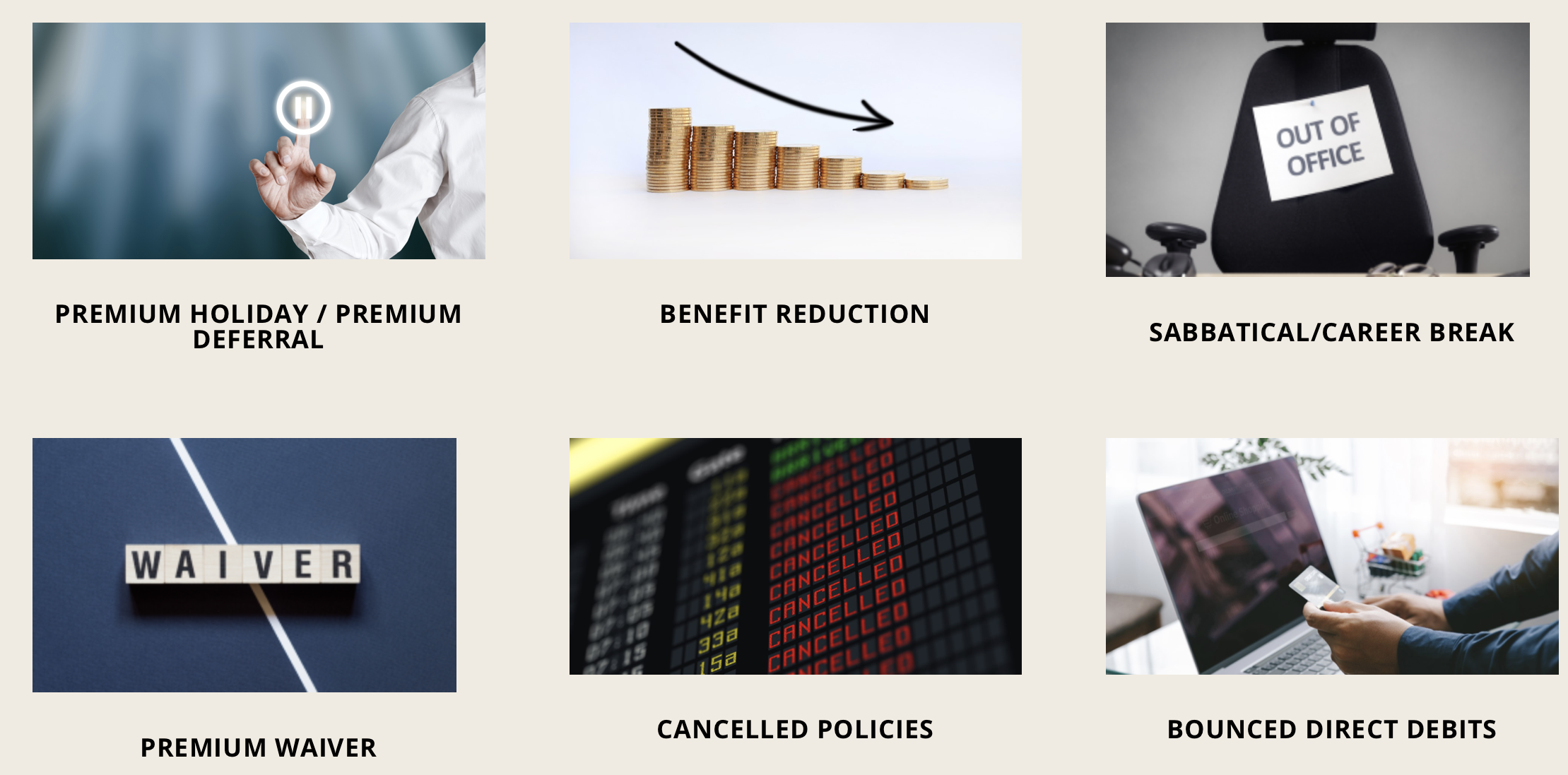
Click on the image above to head to the hub, and seek information on each of the catagories.