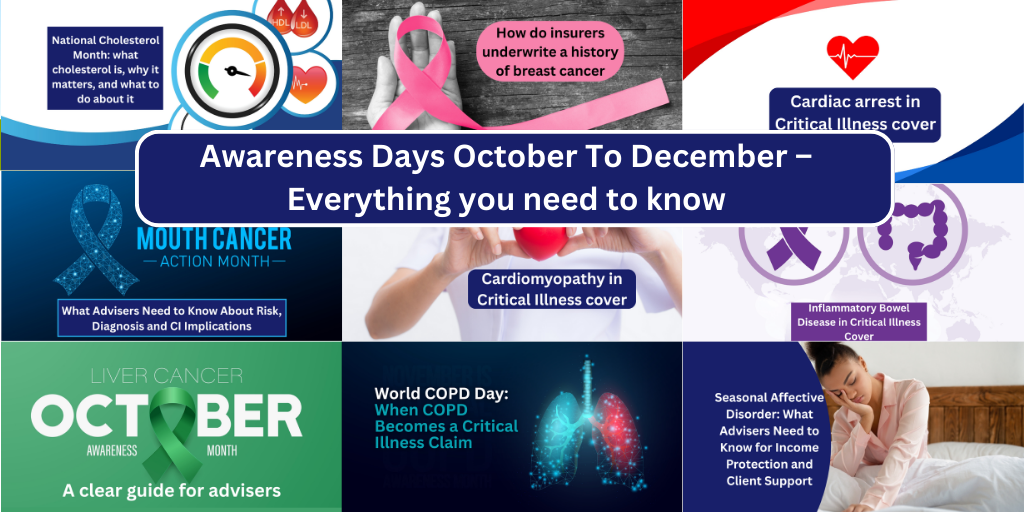
National and international health awareness days provide valuable opportunities for charities and health organisations to highlight important health conditions. They aim to promote education, improve understanding, encourage early prevention and support better treatment outcomes.
Over the past quarter, a number of these awareness events have taken place, and we’ve collaborated closely with our panel of doctors and medical specialists to explore the conditions involved and evaluate how they are reflected within protection plans.
We know that most advisers are not medically trained and navigating complex medical terminology or Critical Illness definitions can sometimes feel challenging. Our awareness event insights are designed to make these conversations easier, helping advisers build confidence, deepen their understanding and better support clients when making protection insurance recommendations.
National Cholesterol Month: what cholesterol is, why it matters, and what to do about it
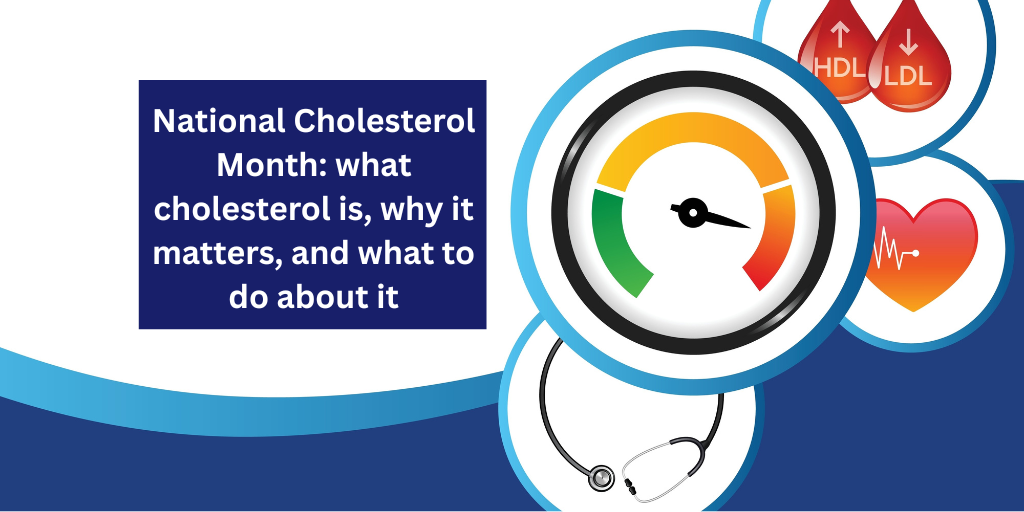
Every October, National Cholesterol Month puts the spotlight on a risk factor we can measure, manage and markedly improve. The campaign, led by HEART UK, aims to help people understand their numbers and take practical steps to reduce heart and circulatory risk.
To support conversations with clients during National Cholesterol Month, and beyond, we ran an Adviser Awareness Month on Cardiovascular Disease. Across October we published short, easy to understand explainers on each of the headline Critical Illness conditions linked to raised cholesterol as follows:


What is the best solution for protecting against mental health issues?

World Mental Health Day, it’s important to look at what protection policies can do to support clients.
When it comes to protecting people, are we truly offering and recommending the right products? Most people in this industry will agree that THE most vital cover for a person that earns and depends on their income is Income Protection (IP). Yet, although on the rise, IP sales continue to be the poor relation to Life and Critical Illness (CI) even though statistically a person is more likely to be off work with an illness or injury than they are to die or suffer from a CI within their working life.
Liver Cancer Awareness Month: a clear guide for advisers
October’s Liver Cancer Awareness Month is about three simple things: raising awareness, spotting problems earlier, and promoting healthy habits that reduce risk.
How do insurers underwrite a history of breast cancer
Breast Cancer Awareness Month, which takes place every October, is a worldwide annual campaign to raise awareness about the impact of breast cancer. The initiative is intended to help and promote risk reduction measures and better screening, as well as improved clinical outcomes and support for those undergoing treatment for and recovering from breast cancer. Every 13th October also marks ‘No Bra Day’, an annual observance that first started in 2011 to promote awareness of breast cancer symptoms.
Raising awareness of ‘crash’ menopause
Menopause symptoms and support are now openly discussed, particularly in the workplace. There is wider recognition that the menopause is not just a women’s issue – male partners, family members and colleagues can also be impacted. The menopause experiences of trans men and non-binary people are also more visible now and show how far we have progressed in a relatively short space of time.
World Pneumonia Day: How Severe Infection Is Treated Under CI Policies
World Pneumonia Day. Pneumonia itself is not usually a CI claim. Most cases are treated at home with a short course of antibiotics, rest and follow‑up. It can be serious, yes, but not typically the kind of life‑altering event CI cover is designed for. Where CI can come into play is when pneumonia becomes very severe, most often by triggering sepsis or the need for prolonged intensive care. That’s where modern policy wordings increasingly step in. We asked our doctors for further insight.
The Unclear Boundaries of Diabetes in Critical Illness Policies

There are 5.8 million people in the UK living with diabetes, of which 1.3 million are estimated to be living with the condition as yet undiagnosed. The condition causes raised sugar levels in the bloodstream which can lead to problems like cardiovascular disease, nerve damage, kidney damage and eye damage among other major health issues. In support of World Diabetes Day on the 14th November, we asked our doctors how this condition is covered within Critical Illness (CI) plans, to explain the variances within the condition and unpack how treatment is evolving to help diabetics best manage their condition. Of course, we’ll be wrapping up by shining a light on how the condition is covered by providers.
Lung Cancer and Critical Illness Cover: What Advisers Need to Know About Screening, Staging and Claims

Each year, Lung Cancer Awareness Month gives us an opportunity to focus on a condition that remains the leading cause of cancer death in the UK, despite real progress in diagnosis and treatment. For advisers, it’s a timely moment to revisit how lung cancer is detected, managed and, crucially, how it is treated within Critical Illness (CI) policies. In this article, we shine a spotlight on lung cancer so you can better understand the medical landscape, the impact of targeted screening, and the practical implications for underwriting and claims.
World COPD Day: When COPD Becomes a Critical Illness Claim
Every November, World COPD Day draws attention to one of the most common long-term lung conditions in the UK, Chronic Obstructive Pulmonary Disease.
It’s a condition that slowly damages the lungs and makes breathing more difficult over time. And while it’s life changing for many, it’s not usually the sort of illness that triggers a CI claim, unless it becomes very advanced.
Know Your Risk: Early Detection Saves Lives This International Men’s Day

International Men’s Day, a key date for raising awareness of Prostate Cancer in the UK, with organisations like Prostate Cancer UK highlighting it as a major health issue for men.
Movember – Why new tests for Prostate Cancer mean Critical Illness cover may not be so generous in the future
Established in 2003, Movember aims to increase the awareness of issues affecting men’s health, such as prostate cancer, testicular cancer, and male suicide. In support of Movember we asked our independent panel of doctors to take a look at prostate cancer specifically, to help advisers better understand how it is diagnosed, its prognosis and how it is covered within Critical Illness (CI) plans.
Pancreatic Cancer: Challenges and Implications for Life and Critical Illness Insurance
World Pancreatic Cancer Day typically takes place on the third Thursday of November worldwide, to raise the profile of pancreatic cancer and raise awareness of the risks and symptoms of the disease.
Mouth Cancer Awareness Month: What Advisers Need to Know About Risk, Diagnosis and CI Implications
Every November marks Mouth Cancer Awareness Month, a time to shine a light on a disease that, while not always top of mind, is rising in incidence and carries significant health and financial implications.
The Human Side of Protection: Lessons from National Grief Awareness Week

From 2–8 December each year, National Grief Awareness Week focuses on what bereavement really feels like and on the help available across the UK. It’s led by The Good Grief Trust, working with a wide mix of charities and NHS partners.
Inflammatory Bowel Disease in Critical Illness Cover
Crohn’s and Colitis Awareness Week takes place from 1st – 7th December each year.
Inflammatory bowel disease (IBD), which includes Crohn’s and ulcerative colitis, causes painful inflammation in the gut and can sometimes require major surgery. Insurance used to treat the two conditions separately, but many providers now increasingly use a single “severe bowel disease” definition to give broader cover for serious bowel conditions reaching a defined surgical threshold.
Seasonal Affective Disorder: What Advisers Need to Know for Income Protection and Client Support

December is Seasonal Affective Disorder awareness month. It is not uncommon to hear someone say something like, “I’m fine in summer, but every winter I just go flat.” Seasonal affective disorder, or SAD, can be what sits behind that. It is not something you will see regularly on protection claims, but it does raise questions about work, reliability of income and whether Income Protection would ever come into play