This insight is the first in our series of output content following our recent September Protection Forum.
For our first session we focused on Consumer Duty, examining the challenges and opportunities the guidance presents for our industry. We discussed how prepared advisers are and what obligations the regulations will place on the advice process. We kicked off the session with an expert overview from Johnny Timpson OBE, who amongst his many roles sits on the Financial Services Consumer Panel, and Peter Hamilton, Head of Market Engagement at Zurich and Disability and Access Ambassador for the Government Disability Unit.
Click the audio playback below to listen to the full session.
Full session audio
Part 1:
Part 2:
Part 3:
“…All about paying due regard to customers to the information and needs of clients and communicating information to them in a way that is clear, fair and not misleading. So that we’re building on that as opposed to simply replacing it. New consumer duty raises the bar beyond paying regard to and making it clear that firms should understand their target market and the customer needs and act to deliver good customer outcomes to our retail customers. It goes further, the consumer agency underpins principles and introduces a number of cross-cutting rules. So we must act in good faith towards our customers, avoid foreseeable harm to our customers, enable and support our customers, pursue their financial objectives. Those outcomes apply right the way through the product lifetime, not just at point of sale so that products and services must be fit for purpose and stay fit for purpose.”
“Customers must receive fair value – that’s not just about price. Let me stress that over the product lifetime, communication must support and enable customers to make informed decisions right the way through the product. Lifetime firms must provide a level of support that meets needs customer needs throughout the product lifetime.”
“But it also means ensuring that we’ve got a robust, vulnerable customer strategy and more recently at the behest of the FCA. We need to be actively looking for four blind spots that are preventing our customers getting great outcomes, addressing them. As I said, it’s a seismic change. It’s all about being more being proactive, focusing and getting it right big ahead of the game, anticipating and tackling harms, moving away from a world where we’ve waited for the car crash to happen, that we’ve carried out an inquest and we’ve reacted to bad news and we’ve punished people and firms after the event has happened. Let’s get ahead of it happening. Preventing the car crash is the best outcome for everybody.”
“We have to do everything we can to clearly communicate throughout the customer lifetime journey what options customers have open to them.”
“I think this is shifting from kind of rules based to outcome based. And I think a lot of people will say, well, we’re doing lots of that already. I think the challenge is going to be how we are evidence that so that there will be a big focus, I think, for insurers and for advisors to be really able to actively assess and evidence how their actions and processes are working to deliver the good outcomes for those clients. It will be data driven. I think it will be proportionate. So I think the expectations will be clearly much higher on larger firms.”
“This isn’t just an insurer responsibility, by the way. There’s an advisor responsibility here to step up and stay in contact with your clients all the way through. You as an advisor, you’ve got skin in the game here. You should be making clients aware. The clients need to understand what they’re paid for. And that’s particularly the role of the advisor.”
“The new duty, as much as anything else, is about making sure consumers receive communications they can understand products and services that meet their needs, offer fair value, and then get the customer support they need when they need it. I think this this is shifting from rules based to outcome based. And I think a lot of people will say, “well, we’re doing lots of that already”, [but] I think the challenge is going to be how far we evidence that. There will be a big focus, I think, for insurers and for advisors to be really able to actively assess and evidence how their actions and processes are working to deliver the good outcomes for those clients.”
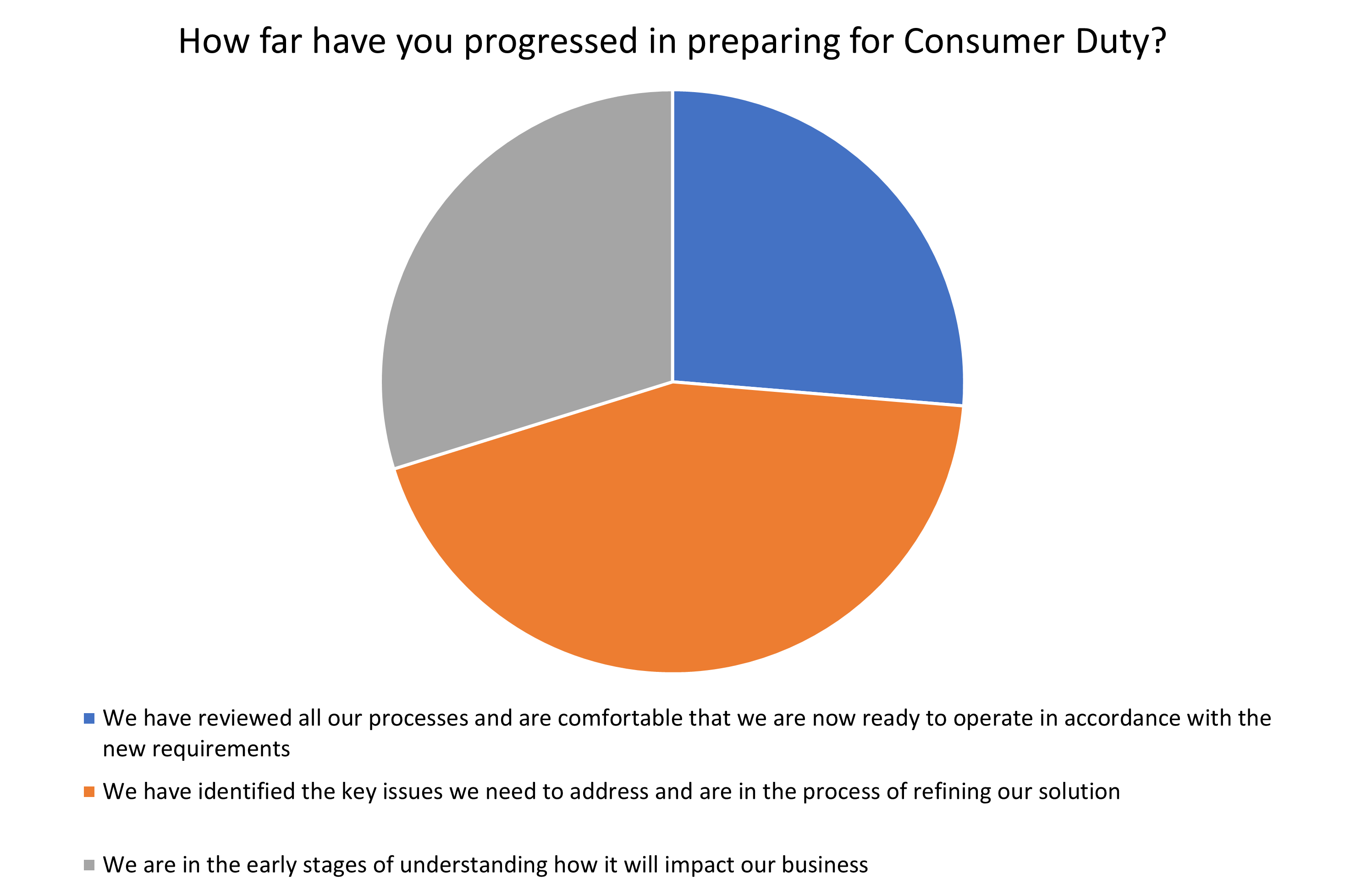
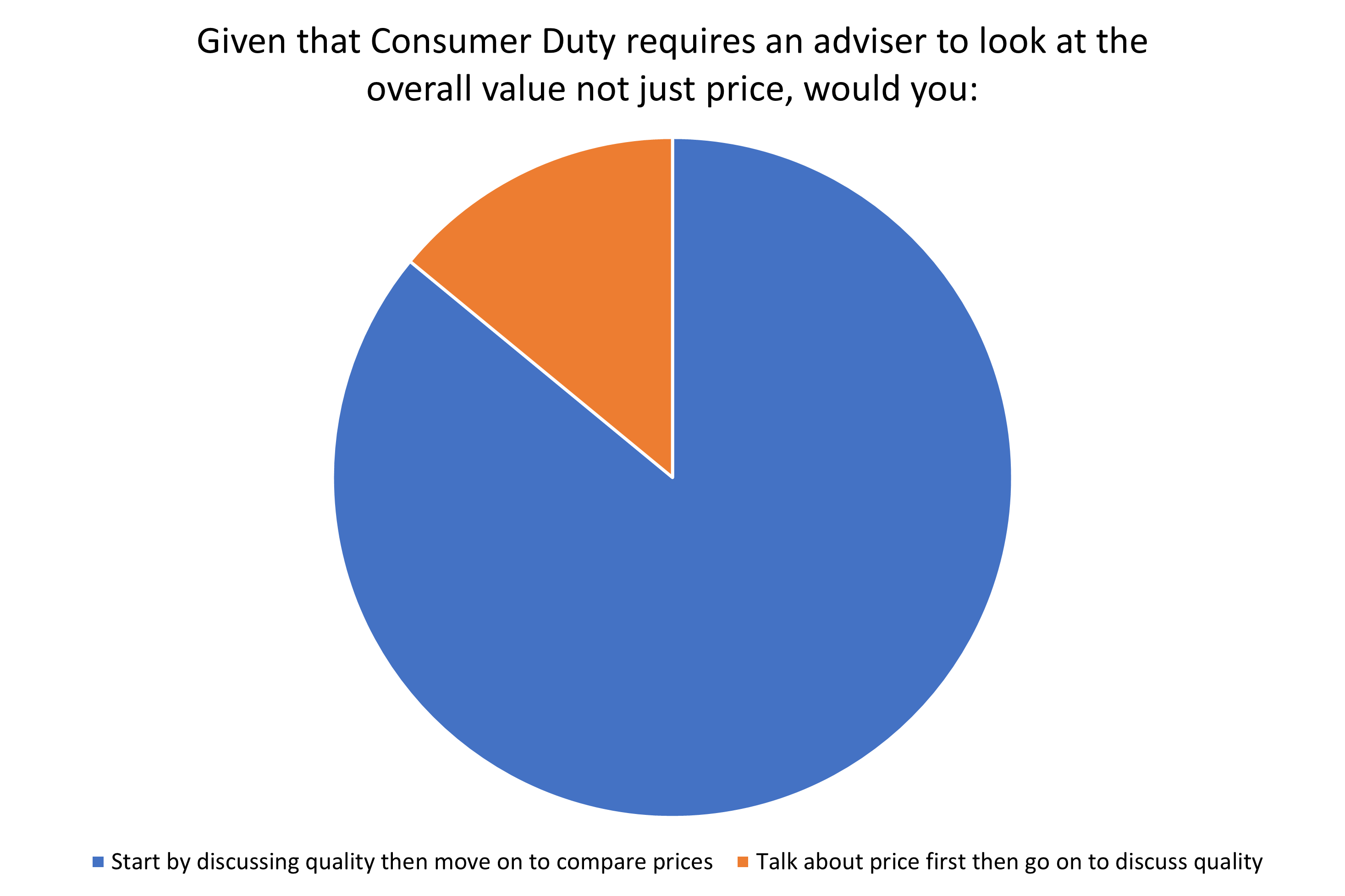
In advance of the session we also polled adviser attendees on the subject of Consumer Duty, asking them to indicate their level of preparedness and what role value and quality play in their recommendation process (suitability and value being one of the areas of focus for Consumer Duty).
Below are the results from those polls: