TRENDING:

Which insurers offer fracture cover and how do they com...
Examining the Crucial Role of Terminal Illness in Life ...
Can Zurich’s ‘Accelerate’ Alleviate N...
  • Adviser Insights
  • Weekly Roundups
  • Showcase Pages
  • Product Updates
  • Cost of Living
  • Claims Hub
  • Technology
  • Events
  • Testimonials
  • Join the team
Protection Guru
  • Life Protection
    • Added Value Benefits
    • Buyback Options
    • Claims
    • Everything you need to know
    • Family Income Benefit
    • Free Cover
    • Funeral Cover
    • Guaranteed Insurability Options
    • Menu Plan
    • Minimum/Maximum Limits
    • Sum Assured Limits
    • Terminal Illness
    • Underwriting Limits
    • Waiver of Premium
  • Critical Illness
    • Added Value Benefits
    • Buyback Options
    • Children’s CI
    • Claims
    • Critical Illness Conditions
    • Everything you need to know
    • Free Cover
    • Funeral Cover
    • Guaranteed Insurability Options
    • Minimum/Maximum Limits
    • Underwriting Limits
    • Waiver Premium
  • Income Protection
    • Added Value Benefits
    • Benefit Payment Period
    • Claims
    • Deferred Periods
    • Everything you need to know
    • Funeral Cover
    • Guaranteed Insurability Options
    • Occupations
    • Minimum/Maximum Limits
    • Return to Work
    • Short Term Benefit
    • State Benefits
    • Sum Assured Limits
    • Terminal Illness
    • Underwriting Limits
  • Business Protection
    • Added Value Benefits
    • Claims
    • Critical Illness Conditions
    • Everything you need to know
    • Free Cover
    • Guaranteed Insurability Options
    • Minimum/Maximum Limits
    • Relevant Life Plan
    • Underwriting Limits
  • Protection Guru Pro
    • Comparing products
      • How to Run a Life Insurance Comparison
      • Compare Income Protection Policies
      • Value for Money Driven Advice – Family Income Plans
      • Comparing Modern CI Plans Effectively
      • Running Legacy CI Comparisons
    • Other functionality
      • Customising Protection Advice
      • The Express vs Custom Route
      • UnderwriteMe Walkthrough
      • Using PGP Product Data Tables
    • Getting started
      • Link iPipeline with PGP
      • Link UnderwriteMe with PGP
      • Add, Edit & Search for Your Clients
  • Meet our friends

Select Page

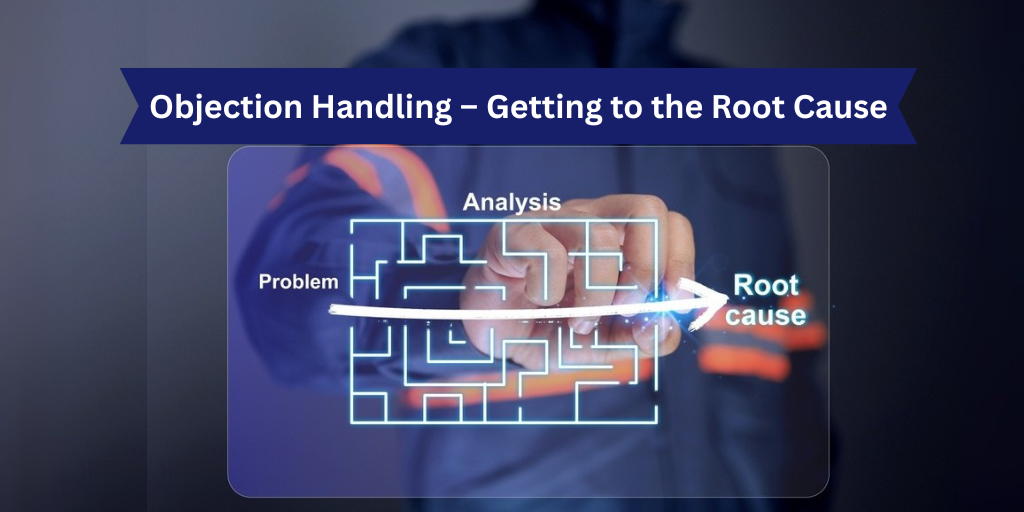
Objection Handling – Getting to the Root Cause

Posted by Matthew Chapman | Jun 26, 2025 | Adviser Insights | 1 |

Objection Handling – Getting to the Root Cause

Share:

Rate:

PreviousGlaucoma and Critical Illness Insurance
NextAwareness Days April to June – Everything you need to know

About The Author

mm

Matthew Chapman

Matthew Chapman is a leading performance consultant, speaker, and coach in financial services, helping major firms and advisers transform protection sales and customer conversations. He has worked with industry giants like Lloyds Banking Group, HSBC Life, and Scottish Widows, driving real results through proven coaching strategies.

Related Posts

Raising awareness of ‘crash’ menopause

Raising awareness of ‘crash’ menopause

16th October 2025

Advising on Business Protection: Your Ultimate Guide

Advising on Business Protection: Your Ultimate Guide

18th September 2024

Sex Vs Gender – Are insurers being clear enough during the application process?

Sex Vs Gender – Are insurers being clear enough during the application process?

21st August 2024

The easiest fix to the most common (and costly) mistake in protection advice

The easiest fix to the most common (and costly) mistake in protection advice

28th August 2025

1 Comment

  1. mm
    Martin O'Connell on 26th June 2025 at 9:49 pm

    Hi Matt
    I think you are absolutely right about learning to avoid the same objection in the future by internally exploring why the objection occurred. I am firmly of the view that, if the process is right in the first place and the nature and breadth of advice has been properly positioned, objections reduce dramatically and that takes time to perfect.

    I may have misinterpreted what you are saying but it seems to me that you are advocating that the adviser doesn’t try to deal with the objection with that client at all but just learn from it so that it doesn’t occur next time? Have I got that wrong? Whist it would always be better if the objection didn’t occur in the first place, surely it is right to address it when it does occur? Forgive me if I have misunderstood.

    Reply

Leave a reply Cancel reply

Your email address will not be published. Required fields are marked *

User Details

Login or Register

Contact us

Protection Guru Pro

Join our mailing list

Digital Directory

Protection Forum

CDA Protection Forum

Archives

An  website

The Financial Technology Research Centre Limited trading as Financial Technology Research Centre.

Registered office: 14 Halifax Court, Fernwood Business Park, Balderton, Newark NG24 3JP

Registered in England No. 02484495

Tel: 020 3740 0000             Privacy Notice       Terms & Conditions

Designed by Elegant Themes | Powered by WordPress

We use cookies to track usage of our website using Google Analytics. Click here to opt-out.
Login Required Please

In order to give you this content, we need to ask you to login.

This site is designed for use by professional financial advisers only. It is not intended for use by consumers.

By continuing, you confirm that you are a professional adviser.

If you are not a professional adviser our consumer site to help you find an adviser for protection advice will follow soon.

Share This
  • Twitter
  • LinkedIn
  • Facebook
  • Like