How is the cost of living crisis impacting adviser businesses? May Forum recap
In this session, we heard from advisers who provided their recent experiences regarding the cost of living crisis and the impact it is having on their business.
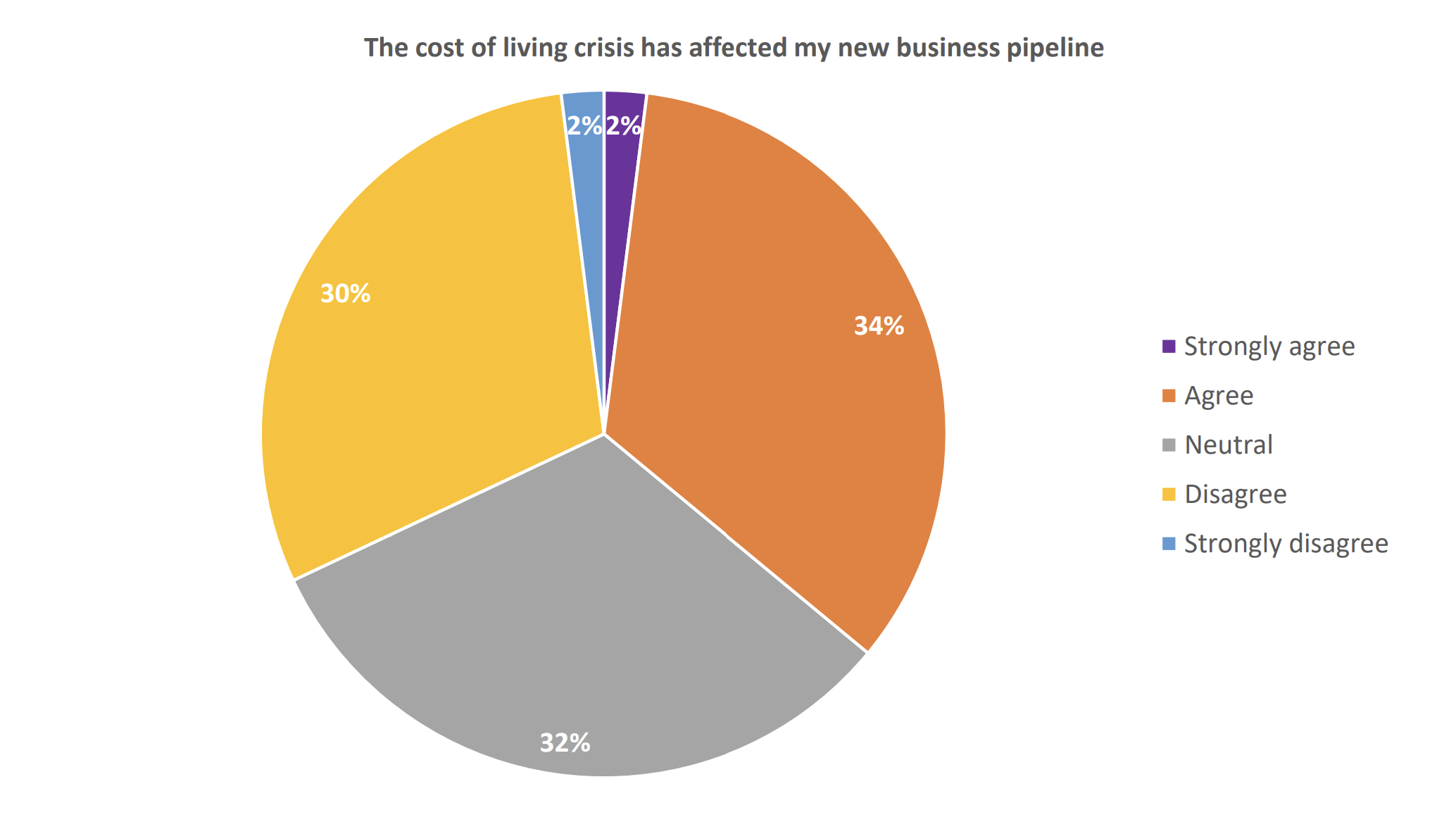
- How the cost of living is affecting new business (if at all)
- How it is affecting existing clients and their view on the policies they hold
- How are they combating any objections or clients potentially looking to cancel their cover
- What are insurers doing to support advisers? What has helped and what would they like to see insurers doing more?
- Is the cost of living providing opportunities for their business that you may not have foreseen?
“We’ve got a duty of care and that’s quite known. I think it’s one of those things that you’ve got to be very, very careful so that people don’t take advantage of a situation because, I mean, let’s face it, we know the general public and they love taking advantage of stuff where they can. So I can understand where insurers have got the tough side of it, they’ve got to keep it fair. But I think after what Zoe said, it’s made it very, very clear how different and how polar opposites providers are. And that actually opens us up as brokers actually, because we can’t foresee what people’s situations are going to be in the future. So for instance, you know, Scottish widows like Zoe was saying might be a great product to offer that particular client. But then if they then go into some kind of cost of living issue, then they’re actually then going to be potentially disadvantaged because the insurer isn’t going to help them.”
“And what we don’t want to do is encourage people to cancel policies because I’m always a believer that people are taking when people take protection, they should never be in a position they can’t afford it because when you can’t afford it, that’s when you need it. And that’s the biggest hurdle at the moment.”
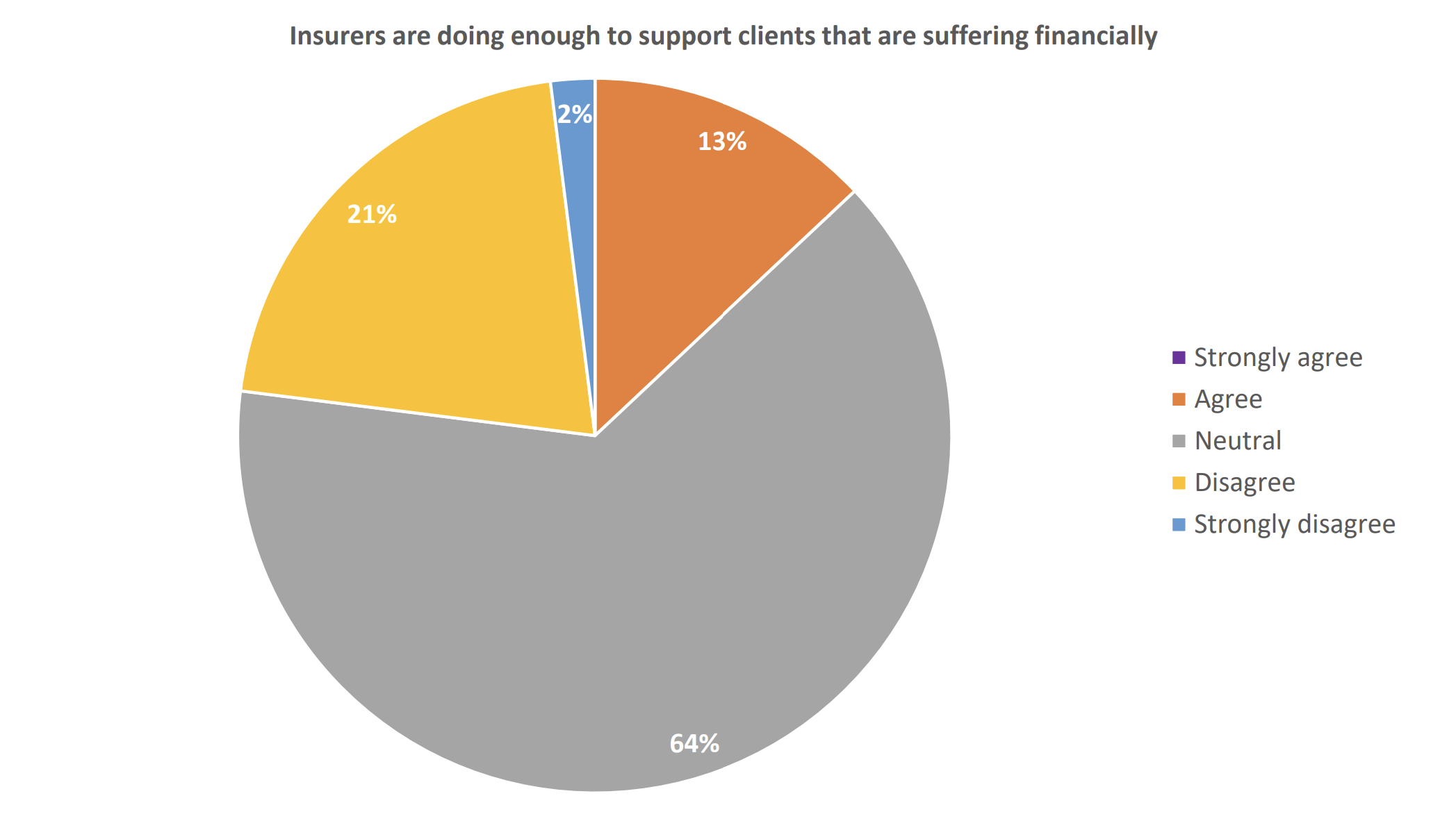
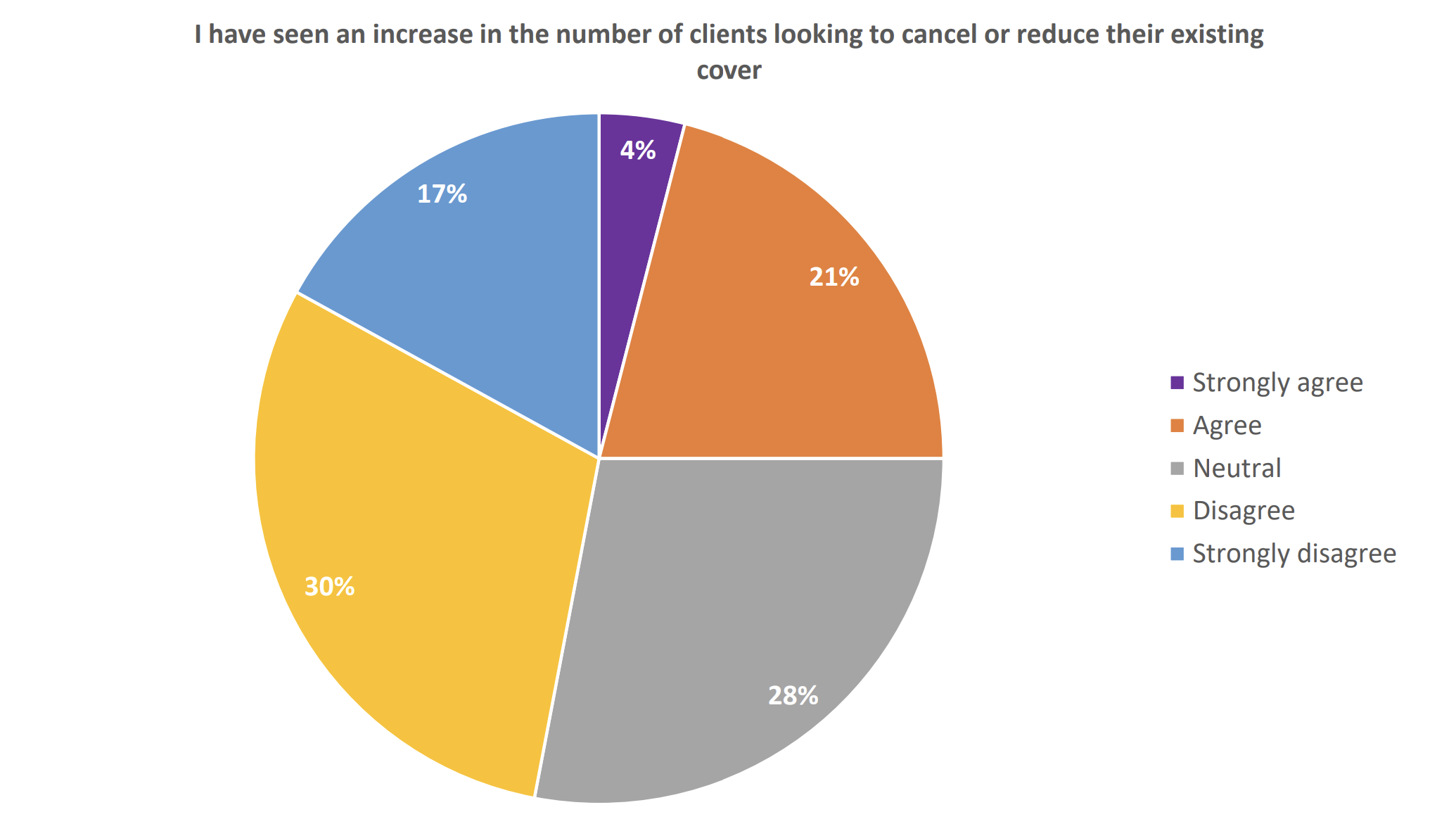
Pre-session Polls:
Full session audio
“The reporting that I have seen can look quite different in terms of whether it’s a cancelled direct debit just a missed premium, and then just getting some consistency around how they’ll reinstate – when does a declaration of good health come in? You know, is it six months? What can they do? And I just think it would be really helpful if there was some sort of easy way to access this really important information from the provider side.”
“I haven’t particularly seen an increase in clients wanting to cancel. There have been a couple of, say, missed direct debits, you know, clients that may be on kind of a tighter budget and things like that. And then they’ve just needed to be sort of managed and to speak with the clients about that and how to manage that, but not particularly lots of people wanting to cancel. And what I have seen that’s been really positive actually has been client engagement with reviews, because I always really try and insist that the client has their annual review with me. But whereas in the past clients may have said, ‘Look, nothing’s changed, it’s fine. I’m happy with everything, it’s fine, I don’t need a review’, more clients have wanted to have that review and actually understand exactly what they’ve got, what they’re paying for, and getting value for money. So, you know, that for me is great because it means that I can explain to clients again what they have, what the value is, their opportunities and to upsell then kind of other products.”
“I think when things are tighter and you’re having to maybe dip into savings, or realise I don’t really have any savings, it does kind of make you realise that it is really important to have protection in place. So if a client did want to cancel the policy, the first thing that I would do is kind of explain exactly what they’ve got and what it does and the importance of it. So, for example, income protection covers you if you have an accident or illness and you’re off work. The benefit of it is you can claim on it more than once. It doesn’t just end after a claim like your critical illness cover does, and obviously your critical illness cover is also needed to give that extra cushion. You know, your partner might have to take time off work to care for you or spend time with you. If you’re unwell, you might want to pay for treatment. And you know what happens if you’re diagnosed with a terminal illness and say, you know, sadly, have six months to live, that income protection might only pay out three months or less, you know, depending on what the deferred period is, whereas your critical illness cover would give you a lump sum.”
“Explaining to them what the different covers do, because sometimes people will say, ‘Well, I don’t need critical illness, I’ve got income protection’ or whatever it might be. So explaining why the blend is important to cover all those eventualities. And then again, value-added benefits, you know, and say to them, ‘Look, if you aren’t using these value-added benefits, how can we get you using them?’ Because if people feel that they’re actually getting some value now and saving some money now from their policy in some way, as well as having that peace of mind, for if the worst happens, then we all like to know that we’re getting something, don’t we? So that helps. And then the final stage would be if we need to do then look at things like payment holidays or potentially reducing cover, things like that. If we need to do that, obviously that’s always better than the client cancelling altogether. There’s quite a big difference between providers. Some of them said that they would look at things on a case-by-case basis.”
“So what I would like to see is really if we did a list of what all the providers do and look at the best out there, see if we can, get this more of across the board, particularly with you being able to kind of flex the policy down for a period of time and then increase the cover again without having to go through underwriting and things like notifications, you know, some providers are much better at notifying you earlier on when there are things like missed premiums, others aren’t. So as much information they could give us about that client’s situation and what we need to do would be really, really helpful. So things like just reinstating direct debits, can we just do that, particularly if it’s just the same direct debit instead of having to get the client to fill in a form or call up? But particularly, you know, if policies cancel or a client cancels the policy, being able to reinstate it with, even if it’s just with a little declaration of health, for example, Scottish widows said if the client cancels their policy, then it can’t be reinstated. You have to reapply and do a new plan.
“I would say that clients now are actually more interested in what they have and actually using them. And definitely video service is a big one. Also counselling sessions, particularly if it’s also for children. I mean, we know there’s a big epidemic as well, you know, children, mental health bullying and, you know, online social media. So definitely that and even just things like, you know, physio sessions because if somebody needs, you know, a few physio sessions and, and, you know, if money’s tight, you know, being able to find up to £70 for a physio session is not always that easy. So definitely, yes more clients are becoming interested in using them. And also I have seen obviously providers improve their offerings.”
“It’s really good to know that those options are available with some of the providers because I just think being able to reduce your cover for a short period of time makes such a difference because, you know, clients are probably in that dilemma sometimes where it might really, really help. And in terms of what my preference would be, I mean, it just really depends on the client’s situation. If it really is something where, you know, they’ve had some issue or they’ve had to pay something out, money might just be tight for a few months. Then, you know, ideally that premium holiday, particularly if it can be like the Aviva one, it can then be paid off over the next nine months. If not, then one of these sort of flexible policy requests. It’s much better than a permanent reduction in benefits or cancelling anything, you know, just doing kind of a temporary reduction of the cover.”
“We’re still awaiting the FCA to come back on some proposed guidance that would extend the scope to not only customers in financial difficulty because of COVID, but also those in kind of more general financial difficulty. It’s something we’re monitoring and we’ll review when it comes out, but it’ll be interesting to see if off the back of that, whether insurers make any changes, it may be that they’re already going kind of above and beyond what the regulatory expectation is.”
“So this was a guide that was produced last year and following up on a guide that was previously produced during the pandemic. And so, yes, there are two there – one for advisors, which is more detailed, just outlining what options are available for customers that might be struggling financially. But then there’s a consumer guide as one that kind of puts it in far more simplistic terms. But the real call to action for the consumer is to speak to your advisor if you’re having difficulties rather than just cancel because there are options available to you or at the very least speak to the insurer. But please just don’t cancel. Call somebody first.”
Tools and resources for advisers:
Guide as mentioned by Emma:
https://www.protectiondistributorsgroup.org.uk/education-resources/
L&G’s Early Warning System and supporting info. Easy to sign up and gain access to policies where a premium has been bounced or policy cancelled…
https://www.legalandgeneral.com/adviser/protection/adviser-toolkit/existing-business-agent-hub/
Zurich have a retention tool that gives you a full status update on your clients’ policies: When direct debits were due; Why they have not been taken (because the bank rejected it or it has been cancelled); How much the customer owes; by when the arrears have to be paid before the policy lapses; and any potential clawback of commission that may happen as a result:
https://www.zurichintermediary.co.uk/search-results?k=retention%20tool
PDF for the Aviva online tool:
https://static.aviva.io/content/dam/document-library/adviser/individualprotection/al97107c.pdf