In reading this article you will understand:
- How advisers can protect clients with generous employer sick pay through appropriate Income Protection planning.
- How Critical Illness policies define conditions such as cardiac arrest and peripheral vascular disease and how to explain these to clients.
- How underwriting for a history of breast cancer is approached and how advisers can sensitively support these clients.
- The concept of ‘crash’ menopause and how value-added benefits can provide practical and emotional support.
- How compliance, quality advice and client understanding work together to create positive outcomes.
Last week’s Protection Guru articles share a common goal, helping advisers turn medical complexity and compliance process into clearer, more human conversations. From crash menopause to cardiac arrest, from breast cancer underwriting to long-term sick pay challenges, every piece focuses on how advisers can translate detail into better client outcomes.
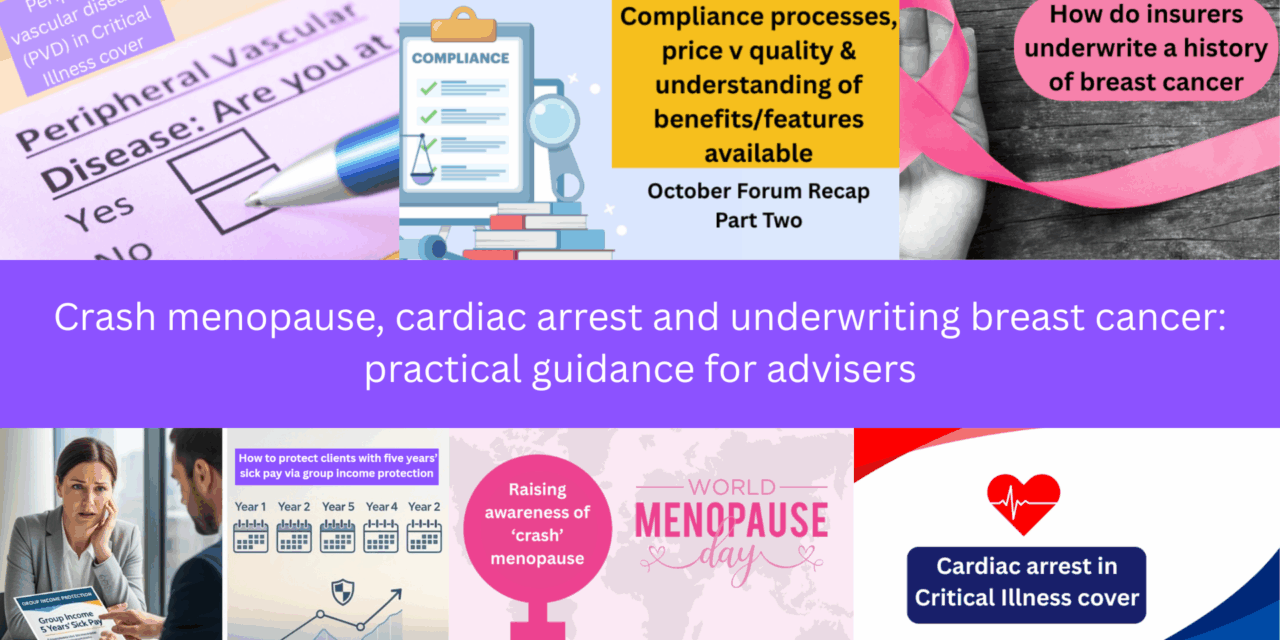
Gary Waters opened the week with a practical look at a scenario many advisers face, the client who already receives five years of full sick pay at work. In his article, How to protect clients with five years’ sick pay via group income protection, he argues that long employer benefits can create a false sense of security. While the first five years may be covered, a 40-year-old client still faces decades of potential income loss beyond that window. Waters explains why shorter deferred periods can offer stronger long-term value, even if they create a short-term overlap. The key, he says, is transparency, making sure clients understand what’s insured, when cover overlaps, and why that trade-off protects them later. He also highlights how employer sick pay schemes often contain hidden exclusions, limited definitions, or employment linked caveats that can erode perceived cover. Advisers should always read the scheme detail rather than assume long-term protection.
Continuing the cardiovascular focus, Protection Guru’s October ‘Adviser Awareness Month’ on heart and circulatory conditions included a detailed explainer on Peripheral vascular disease (PVD) in Critical Illness cover. It clarifies how policies differentiate between bypass surgery, which is covered, and angioplasty, which is not. This is a reminder that Critical Illness definitions hinge on the medical trigger, in this case, major bypass surgery confirmed by a specialist. The article also shared UK data showing that lower limb bypass operations are far more common in older men, helping advisers understand demographic risk and set expectations realistically.
Midweek, George Dunkley returned with Part Two of the October Protection Forum, Compliance processes, price v quality & understanding of benefits/features available – Part 2, a continuation of the session hosted by Ian McKenna earlier in the month (Part One recap available here: Compliance processes, price v quality & understanding of benefits/features available – October Forum recap – Part 1). This second instalment moved from theory to practical application, showing how compliance can reinforce rather than restrict good advice. Panelists including Samm Walker, Tracey Boyd, Ian Merriman and Zoe Priselac shared how ongoing engagement, from annual reminders to benefit education, helps clients see the everyday value of their protection. They also stressed the role of post-sale service and adviser documentation in evidencing Consumer Duty outcomes. As Samm Walker noted, advisers who view compliance as client protection, not bureaucracy, tend to deliver more consistent advice and stronger retention.
Thursday’s clinical focus shifted to breast cancer with Protection Guru’s article How do insurers underwrite a history of breast cancer. Timed to coincide with Breast Cancer Awareness Month, the piece draws on Protection Guru’s medical panel to explain the underwriting factors that drive decisions, including cancer stage, grade, receptor status and time since treatment. It outlines what information advisers should gather before requesting indicative terms, and what outcomes clients might expect for Life, Critical Illness and Income Protection policies. The message is clear: understanding the data points underwriters need helps advisers manage expectations, demonstrate empathy and speed up decisions.
Also on Thursday, Amanda Newman Smith explored an often-overlooked side effect of cancer treatment in Raising awareness of crash menopause. This piece highlights how chemotherapy, radiotherapy and hormone therapy can trigger early or sudden menopause, sometimes called ‘crash’ menopause, which can be both physically and emotionally challenging. The article features insights from Maggie’s cancer support charity, emphasising the need for open conversations and joined-up support between advisers, clients and insurers. It also showcases how value-added services from providers such as Royal London (through RedArc) and Aviva (through Digital GP) can provide tailored help for those affected. For advisers, it’s a reminder that wellbeing discussions can and should go beyond policy claims to real world client care.
Finally, the week concluded with an accessible but technically robust explanation of Cardiac arrest in Critical Illness cover. This article clarifies how Critical Illness definitions work in practice, specifically that most policies pay when the client survives a cardiac arrest and subsequently has a defibrillator (ICD or CRT-D) implanted. It also distinguishes between these devices and pacemakers, explaining why the latter do not meet Critical Illness definitions for cardiac arrest. The takeaway for advisers is to use this clarity in client conversations, helping people understand what’s covered, what’s not, and why certain medical outcomes trigger payment.
Taken together, last week’s insights show how technical knowledge and human empathy go hand in hand. Whether it’s understanding deferred periods, reading medical definitions, or translating compliance into client reassurance, the common thread is clarity, doing the hard thinking so the client doesn’t have to.
Things to reflect on for CPD:
- Review your approach to clients with long employer sick pay and consider how to explain short-term overlap versus long-term protection.
- Build a quick reference chart comparing Critical Illness definitions for cardiac arrest, PVD and other cardiovascular conditions.
- Map which insurer value-added benefits offer menopause, mental health or second medical opinion services.
- Revisit your compliance file templates to ensure you capture client understanding, not just adviser rationale.
- Use Breast Cancer Awareness Month as an opportunity to refresh your knowledge of cancer underwriting questions.
Wishing everyone a great week ahead!