Annual Statements – What progress has the industry made, and what more needs to be done? PART 2 July forum Recap
In the second part of the session, we continued to hear from a range of different people from different roles in the market. They discussed how they use annual statements and the role they play with their clients...
Specifically, we heard from:
- Emma Thomson – Sesame Bankhall Group
- Gemma Howley – Aviva
- Stacy Penn – AMI
“Sarah Moore made a good point that there’s been a few voices in our industry that have said to insurers, annual statements are a bit of a problem. They’ll cause clients to cancel because they’ll be reminded about what they’re paying for. But there’s been far louder voices to insurers saying that that’s not the case in the vast majority of situations. And actually, the benefits far outweigh any potential negatives of sending these statements out. But insurers have not responded. And as Ian showed at the outset, we’ve still got some quite significant insurers that are not sending out statements. And even those that do, they’re not necessarily the most engaging to actually make sure that customers actually read them.”
“We’ve also got to remember that lots of people are buying insurance without going through an advisor. So for me, the key onus must be on insurers to produce those statements to make sure that all policyholders benefit, even if they bought through a non-advised route. So a massive call to action to any insurer on here is please sort out your annual statements if you know there is room for improvement for all of us… It’s really important as an adviser that you spend that time to help your client review their circumstances and make sure the cover is still suitable. But also insurers can play massively a hugely important part in doing that as well.”
“We’ve got a huge, huge risk here with the cost-of-living crisis with people just looking at their direct debits and thinking about how they can save money. And annual statements for me serve a really important purpose in reminding people of the valuable cover that they hold and as well as actually reminding them that they do need to be reviewing it as well and to be going back to their adviser, if they have one, to talk about what they can do to either reduce their expenditure, if they are struggling financially or to make sure that cover is suitable because they have changed jobs or they have changed their family situation or their partner’s situation.”
“I just think, you know, the more we all shout about it, hopefully, we might get more of those insurers over the line. And for those insurers that are doing the right thing by actually sending out an annual statement, you know, please do look at the design of them, because some of them were designed many years ago. The market has moved on. You’ve introduced lots of great things like added value services which are often overlooked, but we just need to make sure that customers really understand what they have bought so that ultimately more of them can claim. We just need to make sure that these statements are being issued because they can prompt claims. We know advisors prompt claims when they undertake verbal reviews with customers, but annual statements can be hugely important in that as well to make sure that people are making sure that they’re benefiting from these valuable policies that we work so hard to design and to sell.”
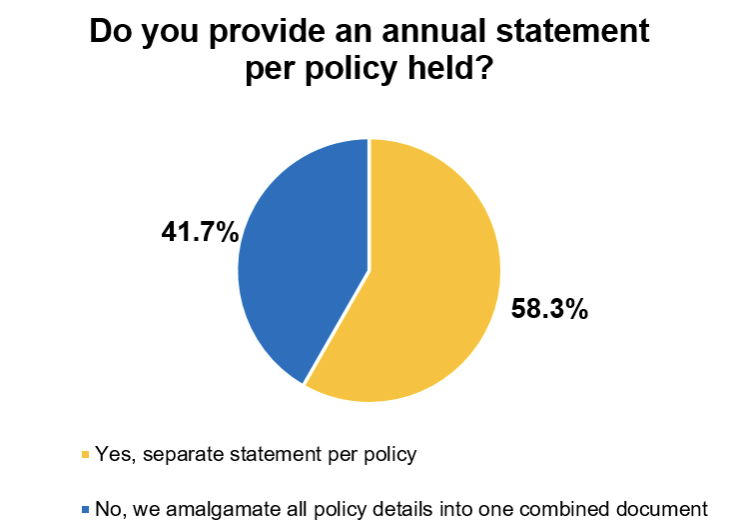
We asked those attendees who provide annual statements…
Full session audio
“When we came about looking at the DigiCare+ app, we did do a lot of research as to what people recognised as part of their policies. 91% of customers surveyed couldn’t name any of the free paid-for benefits that came with the policy, and 58% didn’t realise there were any additional benefits at all when they took the policy out. So if they’re taking it out and they don’t know, then as the years tick on, how are customers ever going to know what they’ve got and what they could be benefiting from? The good news is that 77% of people wanted to be kept better informed about the benefits that are available to them.”
“We wanted to make sure that these were living and breathing things that customers could really benefit from every day, and not just the customer, but also their family. And from day one, people don’t really want protection. It’s an education to get them to understand the need for it. But of course, people don’t want to ultimately have to claim whether it’s life or IP. And so these added value benefits really can be what brings to life the insurance product for the customers.”
“I guess the message from today is that, obviously, the annual statement is really valuable. So when you’re having that annual review with your client, it does have a reference to remind the customer, have you downloaded our app? You might have clients that love going to the gym. We’ve got gym discounts which could be really valuable, saving cash at the moment and other things like our discounts on clothing and really popular brands. So there’s so much more to added value. And the digital care app is proving so far a great success. So I just wanted to take a little bit of time today just to go through how valuable added value benefits are and what their worth is for customers on top of the protection products they have in place.”
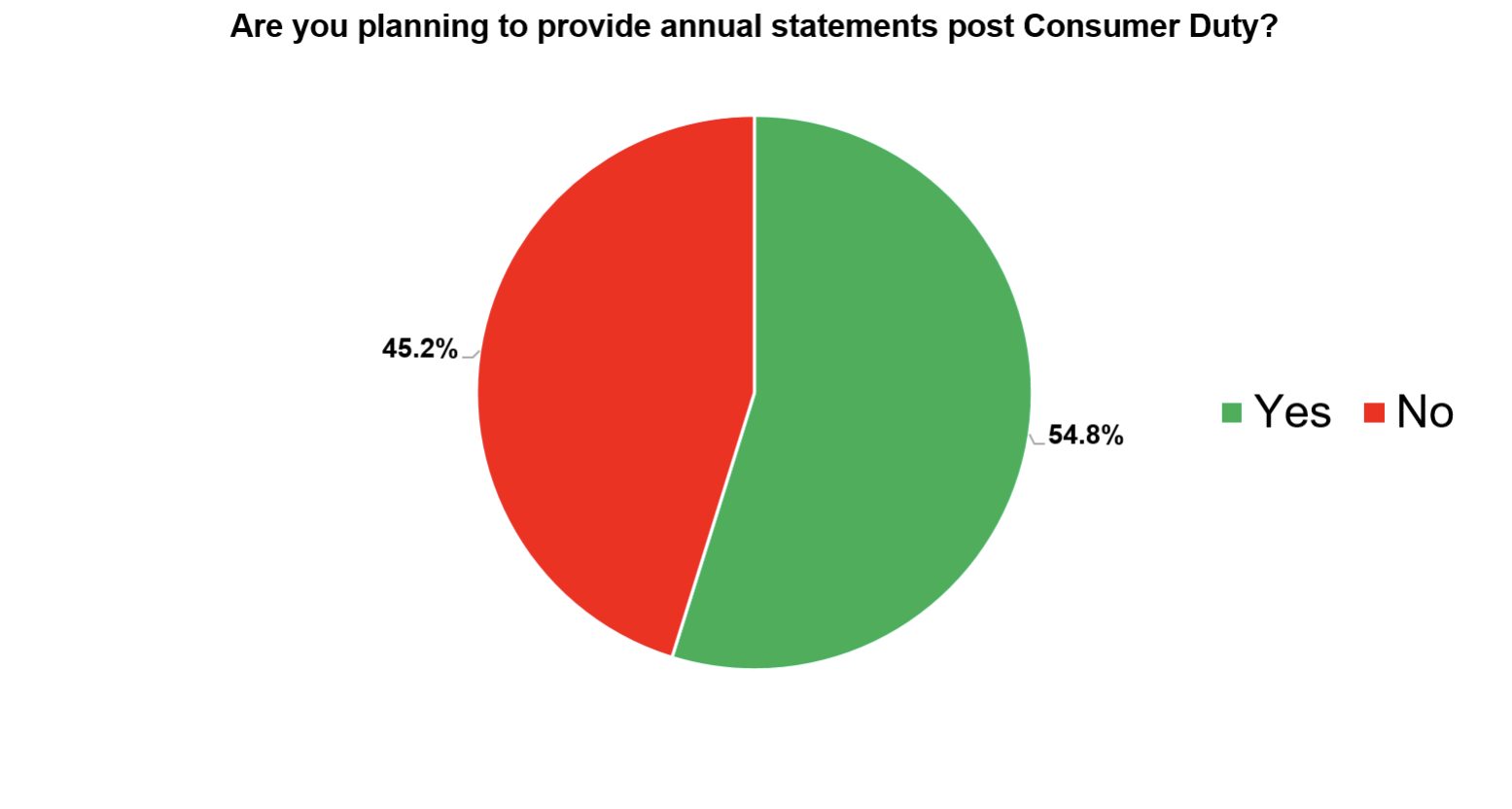
We asked those attendees who do not provide annual statements…
“We’ve found consistently over the last three years that around half of consumers believe the only reason their adviser suggests they take protection is for the commission. So we’ve been trying to think about ways that we can tackle the barriers. And I think annual statements actually are a really good example because they demonstrate the benefits of the policy to customers and really signal to them that it’s not just about the commission from the adviser point of view, that it is more than that.”
“The vast, vast majority of people are of the opinion that giving clients more information will not lead to more lapses, but hopefully lead to more protection conversations, more claims being paid and ultimately more families being protected. I think what we’ve found from this is that there are 1 or 2 insurers out there that are doing this well and they’ve been named throughout the session, but there are more insurers that aren’t doing it well. Just sending out a statement on policies where something’s changed due to RPI or something in the policy changing is not enough. What advisors want is something going out on an annual basis telling clients exactly what they’ve got, but also what they can have access to in terms of the support services.”
“I would encourage everyone to speak more to their clients, give annual reviews, and make sure their cover remains suitable from an insurer’s point of view. Please give advisors as much information on a more regular basis so that they can protect more clients.”