In reading this and the linked articles you will understand:
- How providers cover the conditions listed.
- The types of clients that might be more likely to suffer from each condition.
- How you can raise awareness of each condition.
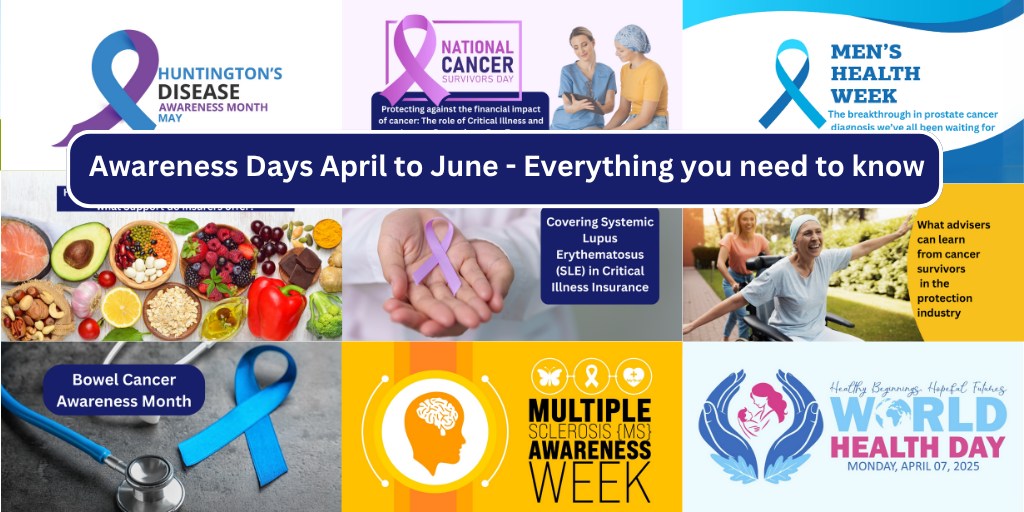
National & international health awareness days are an opportunity for charities and health organisations to raise awareness of medical conditions. They seek to promote education, understanding and support, as well as try to drive better prevention and treatment outcomes. There have been many awareness days this quarter and we’ve worked with our panel of doctors and medical experts to give an overview of various conditions and to assess how these are covered in protection plans. Given most advisers are not medically trained, we recognise that it can be a challenge to discuss complex medical conditions or critical illness definitions with clients.
The awareness event insights we’ve published this quarter (and will continue to publish) will help advisers feel more comfortable and confident discussing the various conditions with their clients when making protection insurance recommendations.
How do Critical Illness plans cover Bowel Cancer?
It’s estimated that someone in the UK is diagnosed with bowel cancer every 15 minutes. If caught early enough the survival rates are excellent, however like with most cancers the later bowel cancer is diagnosed the worse the prognosis. Bowel Cancer UK dedicate the month of April to Bowel Cancer Awareness Month and aim to increase knowledge of the symptoms in order to reduce the number of people dying from the disease each year. To support this important cause, we asked our doctors to provide details of the symptoms, risk factors, prognosis, treatment and how the condition is covered within Critical Illness plans.
World Health Day 2025 – Maternal & Infant Health
April 7th marked World Health Day 2025, we took the opportunity to remember the global challenges that persist for mothers and babies. Every year, nearly 300,000 women around the world lose their lives due to complications of pregnancy or childbirth. On top of that, over 2 million newborns die within their first month of life, and roughly 2 million more pregnancies end in stillbirth.
How do critical illness plans cover parkinson’s disease?
April 11th marked World Parkinson’s Day, an annual global campaign to raise awareness of the condition. In support of this initiative, we asked our doctors to explain what Parkinson’s Disease is, who it affects, the current prognosis and how Critical Illness plans cover this condition.
Multiple Sclerosis and Critical Illness Cover: How Earlier Diagnosis and Modern Policies Benefit Clients
28th April – 4th May marked Multiple Sclerosis Awareness Week. Multiple Sclerosis (MS) remains a significant cause of Critical Illness claims in the UK. With advances in both diagnosis and treatment, insurers have adapted their definitions to better reflect modern medical practice. Understanding these changes is vital for advisers and clients alike.
Understanding Huntington’s Disease: A Guide for Protection Advisers
May saw the campaign to support Huntington’s Disease Awareness Month. The Huntington’s Disease Association (HDA) leads the annual campaign, which focuses on raising awareness about the disease, its impact on individuals and families, and promoting research and support. Given the nature of the condition and the complexities surrounding genetic testing we broke our insight into three articles, all of which you can read below:
Understanding Huntington’s Disease: A Guide for Protection Advisers – Part One
Genetic Testing, Huntington’s Disease, and Insurance: What Advisers Must Know – Part Two
Covering Systemic Lupus Erythematosus (SLE) in Critical Illness Insurance
Saturday 10th May marked World Lupus Day and served to call attention to the impact that lupus has on people around the world. Systemic Lupus Erythematosus (SLE), or lupus, is a complex autoimmune disease known for its unpredictable nature and potential to cause serious organ damage. It can be helpful for advisers to understand how SLE is defined within Critical Illness policies—and more importantly, when it triggers a claim.
Dementia in Critical Illness Insurance
With Dementia Action week running from 19th May until 25th May we wanted to highlight the work of the Alzheimer’s Society who continue to raise awareness of the importance of early diagnosis of people affected by Dementia.
Dementia is one of the most challenging neurological conditions, affecting cognitive function and independence. For advisers, it is useful to understand how dementia is covered by Critical Illness insurance, particularly in the context of early-onset cases, policy definitions, and opportunities for cross-coverage under related conditions.
Preventing Type 2 Diabetes three simple ways to reduce your risk
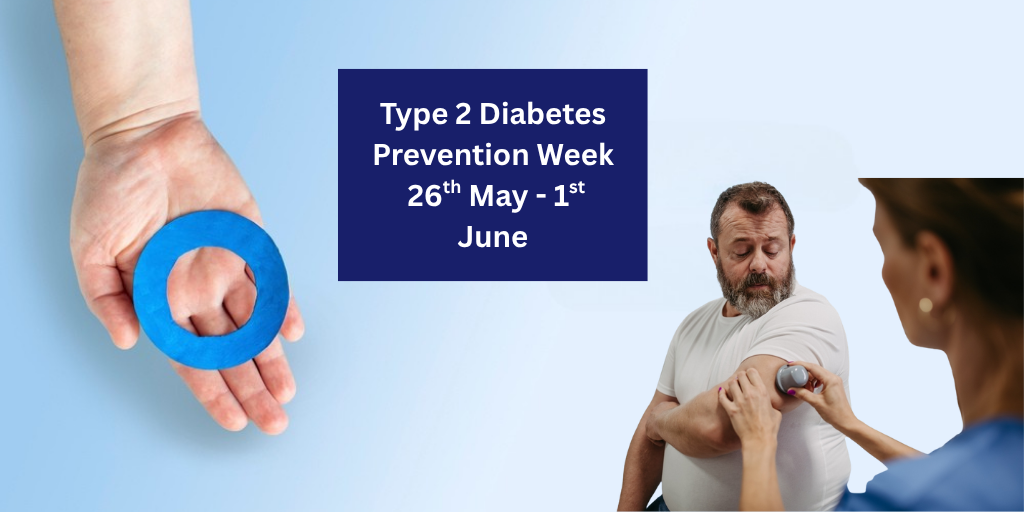
In this Insight we wanted to shine a spotlight on Type 2 Diabetes Prevention Week which ran from the 26th May until the 1st June. As a type 2 diabetic myself, the irony of writing this insight wasn’t lost on me, the working title as I sat down to write was “Things I should’ve done in my 30s.” Type 2 Diabetes Prevention Week is an annual event and is a great opportunity to explore the good habits, which if adopted early, can either halt or delay an unwelcome type 2 diagnosis.
What advisers can learn from cancer survivors in the protection industry

There was a lot to contemplate on National Cancer Survivors Day, which fell on 1st June. It is a day for reflecting on the impact cancer has on those affected by it and for appreciating the medical professionals, charities and organisations that help people through it.
To mark the day, Protection Guru asked those who work in the protection industry to share their personal cancer experiences and discuss key takeaways for protection advisers.
With cancer likely to affect 1in 2 of us during our lifetime we continued the theme throughout June with a number of articles on the topic exploring both the financial and emotional impact with a further two articles which exploring screening initiatives for both men and women. You can access each of the articles by clicking the links below:
What advisers can learn from cancer survivors in the protection industry
Cancer Survival in the UK and Its Impact on Daily Life and Work – Part One
The breakthrough in prostate cancer diagnosis we’ve all been waiting for
Exploring Cervical Cancer: Prevention, Diagnosis, Treatment, and Critical Illness Coverage
How important is good nutritional health and what Support do insurers offer?

To highlight the British Nutrition Foundation’s Healthy Eating Week, we shone a spotlight on how poor diet and nutrition can often be a major contributing factor in some of the common conditions that result in claims. To support clients, maintain a healthy lifestyle and hopefully prevent those conditions from arising in the first place, many insurers now include a range of wellbeing benefits and services, available for the client (and in some cases their family) to use at any time.
What protection product provides the best cover for deafblindness?
Most recently (23rd June – 29th June) marked Deafblind Awareness Week, an annual event to raise awareness of duel sensory loss. The 27th June also commemorated the birth of the American author and disability rights activist, Helen Keller, who was herself deafblind.
In support of this campaign and to help raise awareness of this condition, particularly amongst advisers, in this insight we explored how deafblindness is covered by Critical Illness plans.
Things to reflect on for CPD:
- What are the top 5 things you have learnt from this article?
- How could you use these articles to discuss critical illness with clients?
- How could you use these articles to improve awareness of the conditions covered?