Unveiling Market Perspectives: Insights from Protection Guru’s Forum on Consumer Duty
Protection Guru recently hosted an enlightening forum on Consumer Duty, delving into the current state of the protection market and shedding light on the challenges faced by various industry stakeholders. During the session, representatives from an industry body, a support group, a network, and an insurer shared their perspectives on the readiness of the market for Consumer Duty. The forum provided a platform for these key players to discuss the areas where individuals are encountering difficulties and to outline the measures they have taken thus far to address these challenges. This article encapsulates the insightful conversations and highlights the collective efforts being made to fulfill the obligations of Consumer Duty.
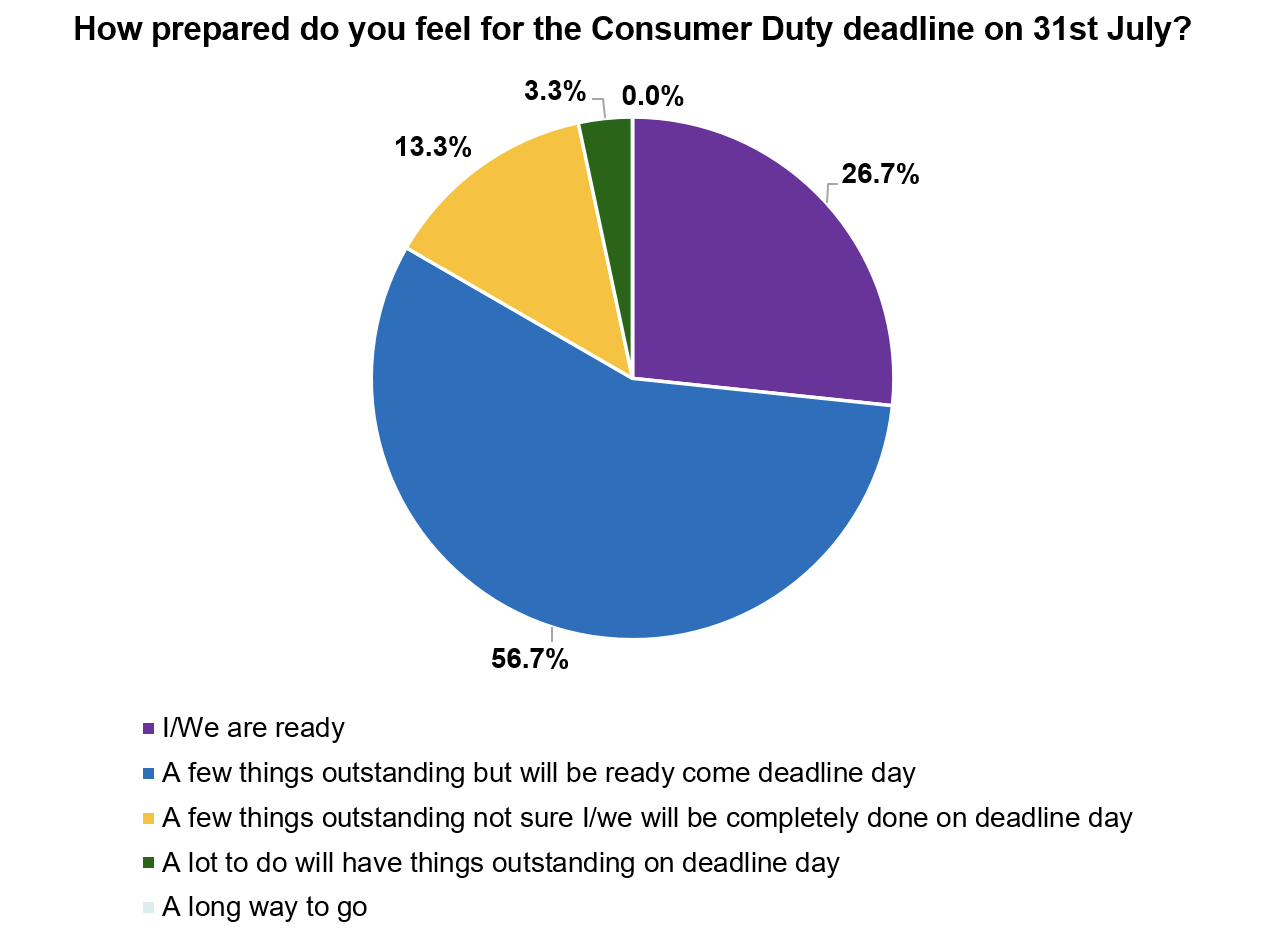
Before the session we asked attendees…
“I suppose from a network point of view, like all networks across the country, we’re working together very hard to support our advisors. Consumer Duty is what we all aspire our business to be, where the client must be at the very heart of everything. And I think that that still holds true for a lot of businesses. We’ve always been that way, but we do have to think about things differently. And Stacy touched upon the FCA is going to want that evidence. It’s using these important key metrics really to see where we can support advisors to write better quality business.”
“Part of it is changing our mindset about it and leaving the products behind. It’s not about mortgages, it’s not about protection. It’s about those people and checking in on their financial situation, their family situation, what’s happened, how can we support them more? And it’s all about building in that longevity of the relationship as well. It’s also ensuring what we talk to them about today is right for the future as well. And it’s laying the groundwork. So we talk about signposting, but I think we should be signposting with every client, even if it’s a brand new one. I suppose that’s supporting customers to pursue their financial objectives.”
Full session audio
Part 2:
Part 3:
Part 4:
“I think the bigger focus with us and what we’re moving to is not just what we call ‘point-in-time data’. So a complaint from a customer is one point in time. They might have had a brilliant experience before and after that, but it’s very difficult if you start looking at point-in-time data only. It’s difficult to see how see the customer’s journey from kind of what we call sale to renewal. So we’re looking at sort of more around qualitative data. And I hate the word because it’s just difficult to pronounce, but we’re looking at more qualitative data and how a customer’s journey is from start to finish.”
“We’ve started to look at things from a customer perspective because it’s very easy to forget there is actually a customer at the end of this. I know it might sound silly, but sometimes because you’re so caught up in the data, you don’t think about the customer. Which is why feedback from surveys that we do reviews on said customer journeys is so important. That’s kind of what we’re starting to get to, which is making sure that that we’ve got the right information in order for us to make the right decisions and the right choices.”
“Everything’s moving into the AI world, which is obviously a whole other matter. Everything’s getting to be digital. That’s the way the world is going. But not everybody can deal with that depending on their circumstances. They might not have, you know, a laptop to be able to access to be able to access online information. How do we ensure that we don’t leave people behind in the customer journey? Identifying customers with vulnerable characteristics and kind of testing to make sure that they have the same positive experience that everyone else does because that’s the absolute least that they deserve.”
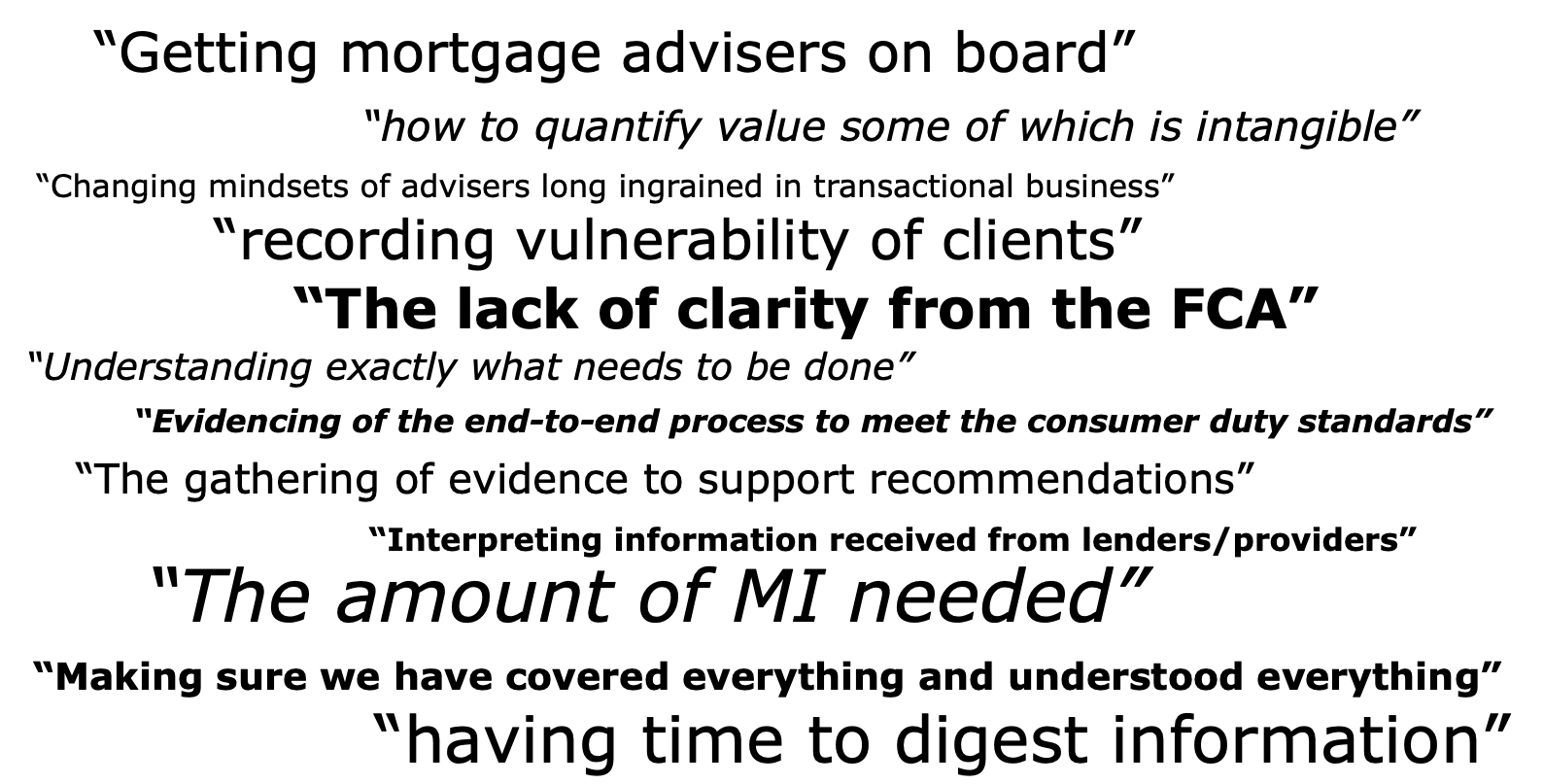
We asked attendees what they are finding most challenging with the implementation of Consumer Duty…
“If you take a step back, Consumer Duty really is about a firm’s proposition and strategy. So we’ve been saying to firms that where they are saying that they advise on protection, they should be using this as an opportunity to review that customer journey, review how protection is raised as part of the mortgage process, how it’s integrated so it’s not seen as an add-on or an upsell, and thinking about how to make quality conversations that are both memorable and meaningful. And for those firms that aren’t advising on protection for whatever reason that may be, I think signposting will play an ever-increasing role. I know from speaking to some firms, Consumer Duty has got them thinking about that area and thinking about what mechanisms are in place that where protection need is identified, they are able to pass that customer on to someone suitable. So that’s been our kind of overarching message on Consumer Duty.”
“In terms of changes to processes training, there might be additional information that you might need to supply to the network. Data is a really important part of Consumer Duty, and I think that’s an area that firms are really struggling with – how do we evidence and monitor the outcomes that customers are receiving? Have a look at what data you’re collecting at the moment and then have a look at that against the outcomes that you’re trying to deliver. What is that gap? I think most firms will probably need to collect a greater variety of information, but it’s not about collecting as much information as possible and doing nothing with it. What the FCA wants firms to do is to take the data, see what trends and insights they can draw out of it, and really create kind of a feedback loop.”
“Are the protection conversations having enough of an impact? Because essentially what I think we’re trying to achieve in the protection space is that where customers have purchased protection, they understand what they’ve bought, what the purpose of it is. And if for whatever reason they’ve decided not to take protection, they understand the risks and implications of that decision. So it’s about doing everything within our power and within our remit as advisors to make sure customers are put in that informed decision.”
“Is the claims process fit for purpose? I think it will be an area the FCA will look at closely, particularly around whether there’s unreasonable delays as part of the claims process. And then the last area I wanted to mention is around vulnerable customers. I noticed in the pre-meeting feedback that this was one area flagged as something firms are struggling with, particularly how to record vulnerabilities of clients. And whilst I think it’s important to be able to record vulnerabilities, firms should also be thinking about what support they may need to put in place to help ensure that they are treating vulnerable customers fairly. So, for example, on an individual customer level, if you have a customer that says to you they have ADHD, it means that they find paperwork really challenging. What can you do to tailor your processes? Do you need to give them more time? Do you perhaps need to speak and communicate with them over the phone to explain and break down what the different bits of paperwork mean and what it is you need from them?”
“The final element is thinking about what systems and controls you have in place to ensure customers are treated fairly, particularly those with vulnerable characteristics. So, an example that sprung to mind is making sure you have the correct processes in place that if a customer did sadly pass away, the letters are going out to the correct person. And I think all of that just links back to the whole avoiding causing foreseeable harm element as well. So essentially, I think with vulnerable customers, it’s the FCA want to be able to see the evidence of what you’ve done with that information.”
“There should now be an advice point where you are going back to customers on an annual basis and saying either ‘this product continues to be suitable’ or ‘actually looking at your circumstances and this new product innovation or that new product innovation, um, potentially we should be moving that contract’. “
“There’s an annual review of the ongoing suitability of investment advice, product wrappers, etcetera. So I think there’s a very natural question that comes back and says, well. Why? You know, why don’t we go back every single year? A lot can change in the year. Yeah. Pay rises, children. Um, change of partners. So many things. Circumstances change year in, year out. Now I do recognise if that starts getting momentum, that’ll probably have a massive impact on pricing and all sorts of things going forward. But I just wanted to share that.”
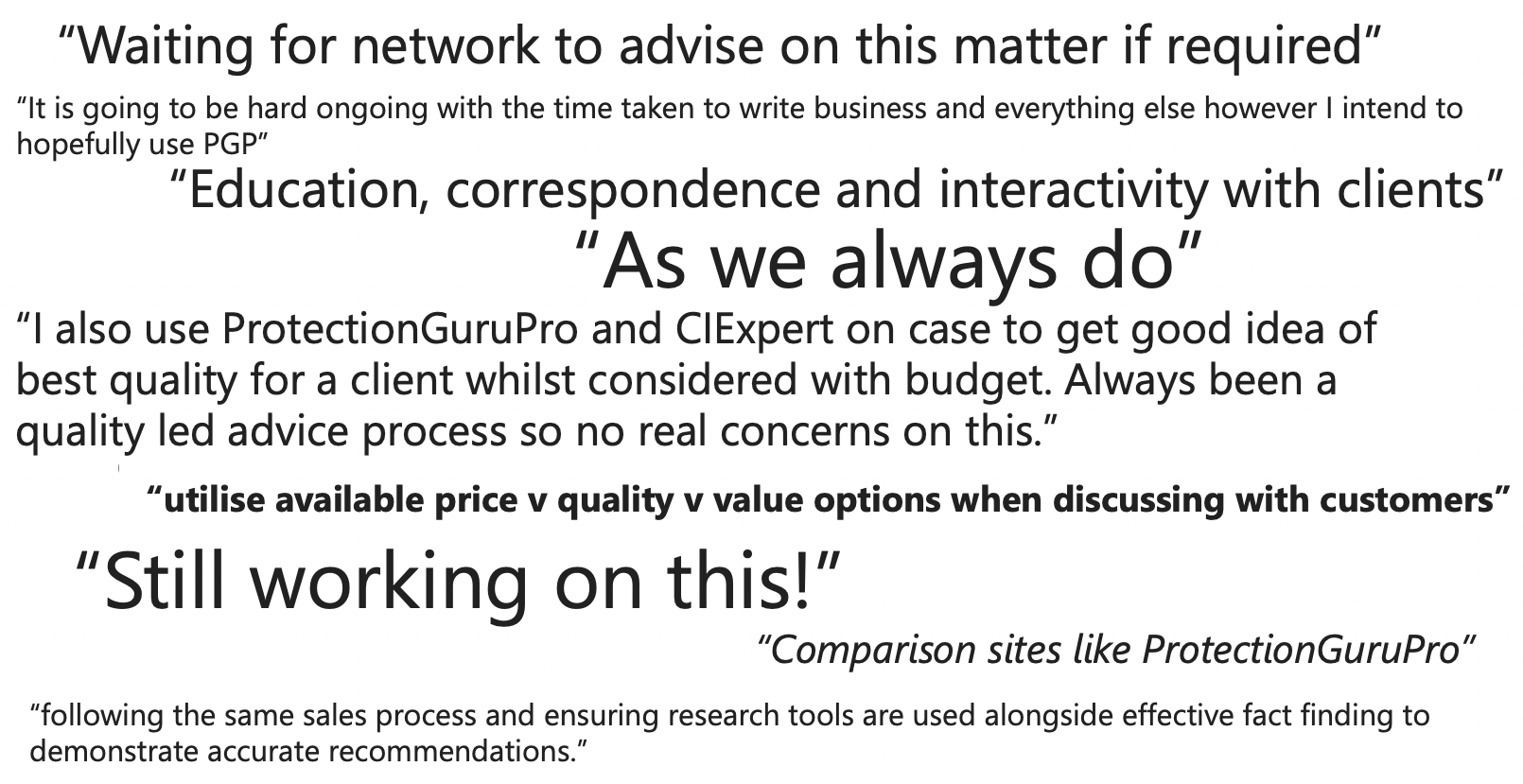
We asked attendees ‘How will you assess and demonstrate value to customers post the consumer duty deadline?”…
“The things that we look at are firm-specific implementation plans and introducing Consumer Duty staff training and awareness, looking at the good knowledge of outcomes and cross-cutting rules, gap analysis, and then determining the relevant tests and evidence adherence all before the 31st of July. Some of the issues that we seem to be coming up against or firms are coming up against, certainly when they’re looking at things like the gap analysis, is they weren’t really putting any real substance to the content, so they were simply ticking ‘Yes’ in the boxes for the gap analysis to say basically they don’t have any gaps there… Ultimately what the FCA were then looking for was to see some rationale as to why there was no gap. So what is in place and explanation as to how to evidence this outcome. And this seems to be a kind of breakdown there in explaining this. Also, the gap analysis seems to be completed based on what the firm is doing now rather than considering going through the lens of consumer duty. So rather than looking at it, what will we be doing? How are we going to implement and what are we going to do in the future? They were basing it on what they were doing right now. So that seems to be some of the biggest areas and the challenges that we’ve seen.”
“So it’s not just about saying, ‘Right, this is down to your compliance person within the business or the director of the business. They need to make sure all of this done’. It starts from the top right down to the bottom. So whether there’s paraplanners, admin staff, mortgage advisors, protection advisers, even right through to investment advisors, it’s something that needs to be adhered to or adopted by everyone, otherwise it’s actually not going to work.”
“We have created a full vulnerability hub with all of the policies, procedures, documentation, and even support on guidance. We even have things within our vulnerability hub talking about different illnesses, different disabilities, how to spot them and as Stacey said, what the characteristics actually are. We all know that it isn’t always visible. So what we’ve tried to do is go one step further there to make sure that everybody’s one very clear on what that means, but to what they actually need to do when it comes to working with vulnerable clients and how they can make sure the business is covered as a whole as well. I think for me it’s quite different from a network perspective to a service providers perspective.”
“We’ve used the best research tool, Protection Guru Pro, to make sure we’ve picked the right product for that customer. It’s all being recorded and we can log back in and see all of our data – that just leaves that advice process and speaking with the customer, making sure you are doing the very best by them. That’s the easy part of the job and that’s the bit you’re good at and you can leave all the tech stuff behind.”
“Even if there are changes to circumstances, we’ve mentioned, you know, getting married, having children, all of those circumstances, as long as that customer understands you’re there across all life events, that should mean then that they keep coming back and forth and to you and but yeah, I think from a service providers perspective, ultimately it’s just making sure we are extremely visible and helping firms understand that it isn’t just about it’s a one rule fits all either for consumer duty.”
“We have a campaign called ‘Customer First’, which just brings everything together and just reminds the brokers that they need to look at their customer as opposed to product sales... The challenge you’ve got is, do you know you’re doing a good job for the customer? And we’re keen to get our guys using more feedback. Don’t be afraid to ask the customer for feedback. Did I do a good job? I mean, that’s the way to drive referrals. I if they say you’ve done a great job, that’s wonderful. Thank you very much. And do I know anybody else? So actually, the feedback process is a lead generator for you, so don‘t be afraid to do that.”
“I don’t see any negative thing with Consumer Duty at all. The industry’s needed this for a long time and it’s how we push evolution forward in terms of delivering the best possible outcomes. We’ve done a lot of training for the mortgage advisors and all staff, so it’s not just mortgage advisors or protection advisors, but everyone in the business about the importance of holistic advice, the importance that signposting takes in what we do, the importance of protection as part of that process.”
“We’ve made sure that within our processes we have embedded things where we are working as hard as we possibly can to demonstrate the value that we deliver for our customers… We’re going through a detailed process of underwriting, pre-sales and evidencing why we’ve delivered value for that customer, both in terms of the best possible terms, best possible price and the best cover out there for them. PGPro, in terms of comparing products out there to make sure that we’re always delivering value. And if the customer is trying to opt for a lesser value product, we’re identifying and signposting those risks using reports like that to demonstrate it.”
“I think it’s inevitable in a post-Covid world. I think the income shock that we all experienced kind of woke us all up to this idea that we’re not as financially secure as we think we are. And I think it’s really important that you go back not just to the customers that you’re dealing with annually, but also client books where maybe you’ve lost contact with those customers to make sure there aren’t gaps and you’ve got the right kind of product density in terms of other things we’ve done. ”
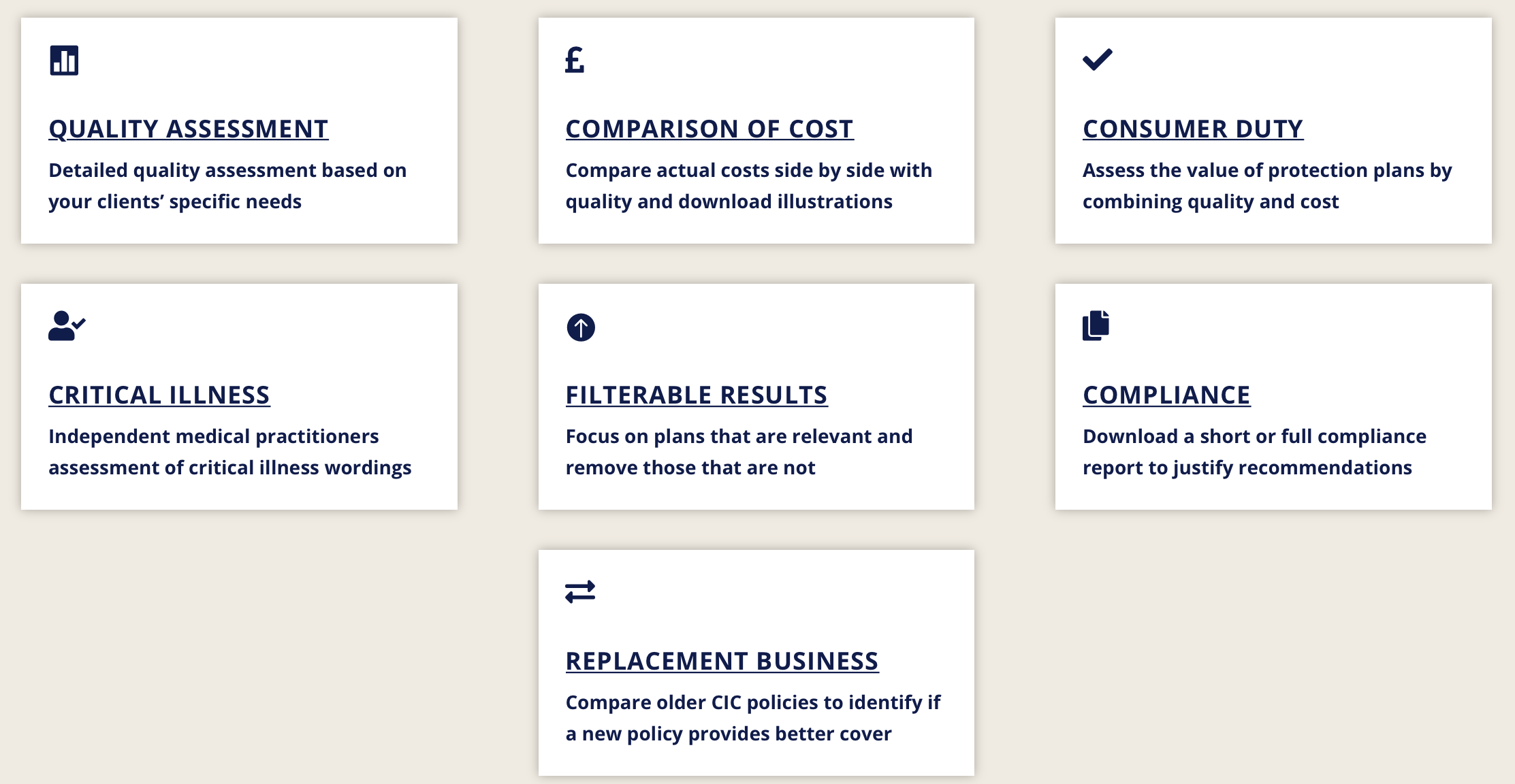
How ProtectionGuruPro can help…
ProtectionGuruPro helps you to provide a “consumer duty ready” value assessment, combining quality and cost…
If you would like to learn more about ProtectionGuruPro, understand how the tool may support you with your consumer duty requirements or arrange a demonstration please do not hesitate to get in contact with us.